What Is the Best Lash Glue?
What Is the Best Lash Glue?
The best lash glue is not necessarily the fastest, strongest or most expensive adhesive.
The best lash adhesive is the one that suits your application speed, your working environment and the way you like to work.
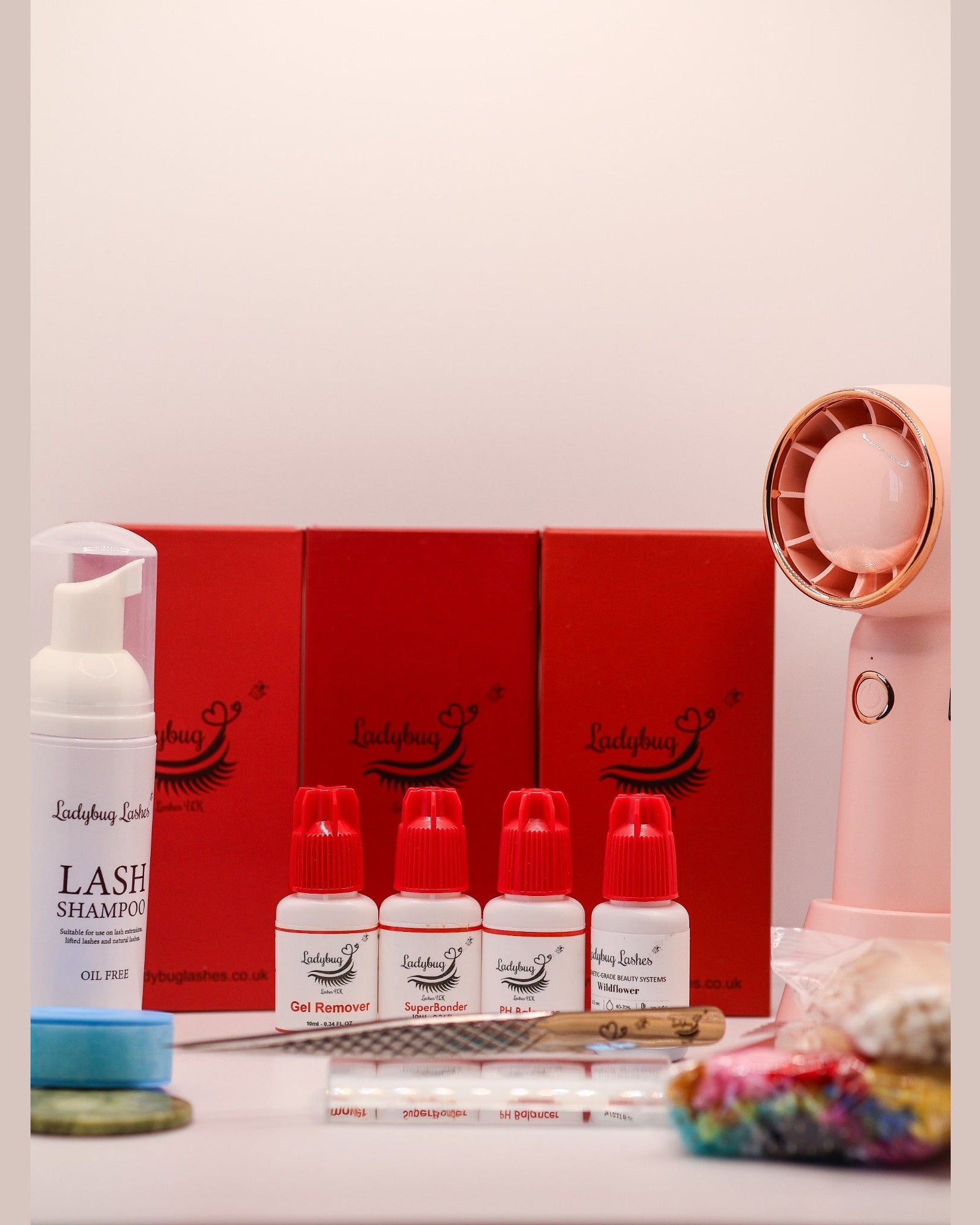
At Ladybug Lashes, our cosmetic-grade lash adhesives are manufactured in the UK and available in a range of curing speeds and viscosities, so you can choose the one that works best for you.
Which Lash Glue Should I Choose?
A simple starting point is your application speed.
Beginner or Slower Lash Artist
Meadow – 1–2 seconds
Meadow gives you a little more time to make your placement before the adhesive cures, making it a great choice for newer artists or anyone who prefers a slightly slower working pace.
Intermediate Lash Artist
Spring – 1 second
Spring is a great step up as your speed increases. It has a very thin consistency and offers a quicker cure while still giving you time to achieve good placement.
Fast or Advanced Lash Artist
Wildflower – 0.5–1 second
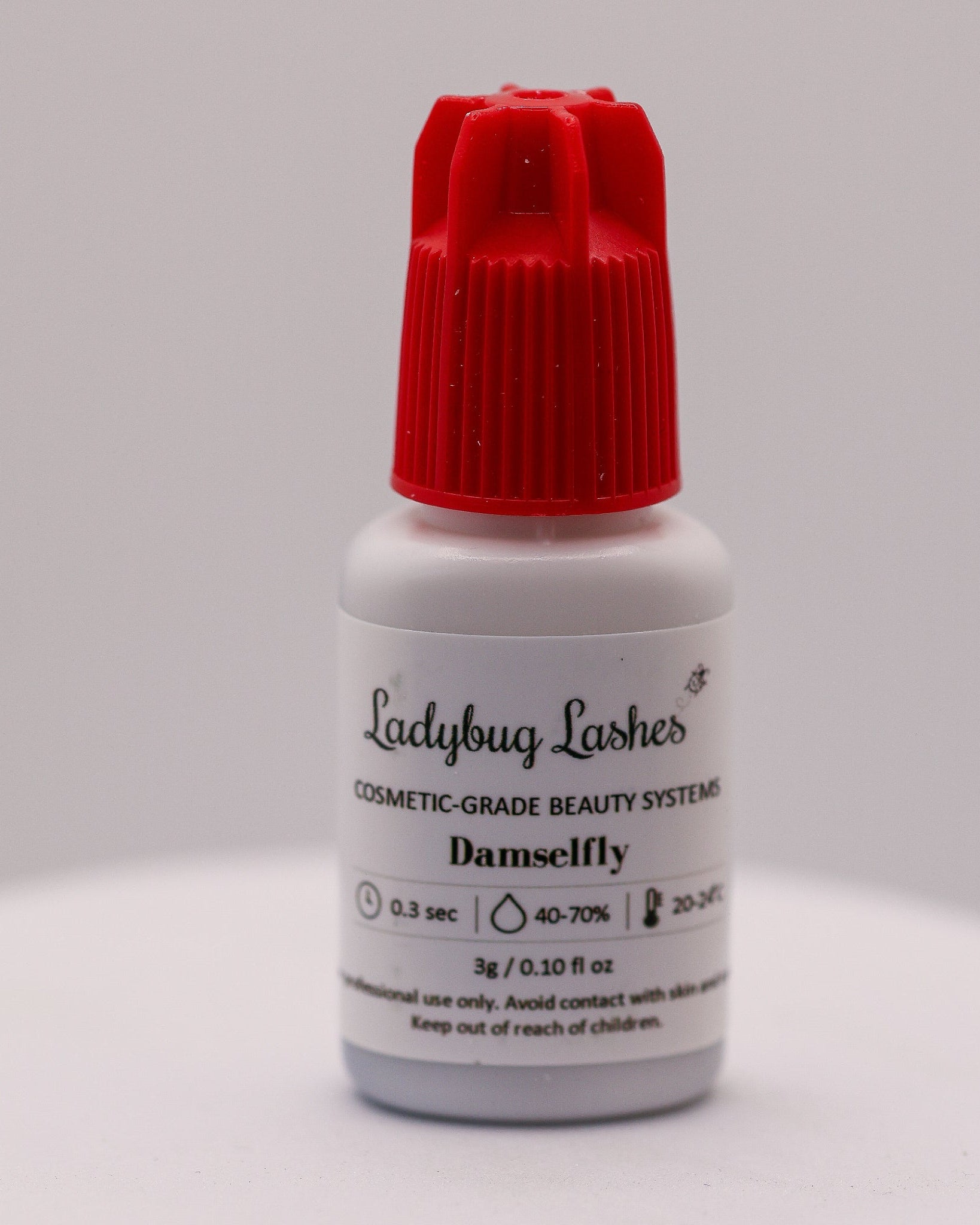
Damselfly – 0.3 second
These faster adhesives are designed for experienced lash artists who isolate and place quickly and need an adhesive that can keep up with their working speed.
Faster Doesn't Always Mean Better
One of the most common mistakes when choosing lash glue is assuming that faster automatically means better retention.
It doesn't.
If your adhesive starts curing before you have completed your attachment, you may not achieve the bond you need. This can result in extensions shedding prematurely.
Your adhesive should work with your speed, not against it.
Is Your Current Lash Glue Too Fast or Too Slow?
Your application and retention can often give you clues about whether your current adhesive is curing at the right speed for you.
Are You Getting Pop-Offs?
If extensions are popping off the natural lash, particularly when brushed or shortly after application, this can indicate that your adhesive is curing too quickly.
The glue may already be beginning to cure before you have completed your placement, meaning the bond does not have enough time to form correctly.
If you are experiencing regular pop-offs, consider moving to a slower-curing adhesive.
For example:
Damselfly → Wildflower → Spring → Meadow
Moving one step slower may be all you need rather than making a dramatic change.
Are You Getting Lots of Stickies?
If neighbouring lashes are regularly sticking together after placement, your adhesive may be curing too slowly for your working speed.
This means the bond is still wet when you move on to isolate and place the next lash.
If you are repeatedly dealing with stickies despite good isolation, you may benefit from moving to a faster-curing adhesive.
For example:
Meadow → Spring → Wildflower → Damselfly
Again, you do not necessarily need to jump straight to our fastest glue. Moving one step faster can often make application feel much more comfortable.
A Simple Rule
Pop-offs can indicate your glue is curing too fast.
Try a slightly slower adhesive.
Frequent stickies can indicate your glue is curing too slowly.
Try a slightly faster adhesive.
Your room temperature, humidity, preparation and technique can also influence adhesive behaviour, so these should always be considered alongside your chosen curing speed.
Your Room Conditions Matter Too
Temperature and humidity can affect how quickly your lash adhesive cures.
Generally:
Higher temperature or humidity = faster curing
Lower temperature or humidity = slower curing
This means the same adhesive can feel faster or slower depending on the environment you are working in.
If your glue is curing too quickly, moving to a slightly slower adhesive such as Meadow can help.
If your adhesive feels too slow, Spring, Wildflower or Damselfly may be more suitable depending on your application speed.
Don't Forget About Viscosity
Curing speed isn't the only difference between adhesives.
Our current range includes:
Very thin: Damselfly, Wildflower and Spring
Thin/medium: Meadow
There is no right or wrong viscosity. It comes down to your technique and personal preference.
All of these viscosities can be used for classics, hybrids, volume and mega-volume applications.
Not Sure Which Glue Is Right for You?
We have created a more detailed What Glue Is Right for You? guide covering:
-
Application speed
-
Temperature and humidity
-
Glue viscosity
-
Lash preparation
-
pH
-
Retention
-
How to adjust your adhesive choice when your environment changes
Read our full What Glue Is Right for You? guide here.
You can also download our free Lash Adhesive Retention & Environment Guide, which goes into even more detail about getting the best performance and retention from your adhesive.
Can I Try a Sample First?
Yes. Where a sample size is available and in stock, trying a sample can be a great way to find out how an adhesive works with your technique and your environment before purchasing a full-size bottle.
Where both options are available, you can choose between the sample and full-size version depending on what suits you best.
What About Lash Glue Allergies?
If you or your client has experienced a suspected reaction to lash adhesive, choosing a different glue based purely on curing speed is not the answer.
We recommend reading our educational information on lash adhesive allergies and sensitivities before considering another adhesive.
There is no lash adhesive that can be guaranteed not to cause an allergic reaction.
If you have a specific question after reading our guidance, please contact Ladybug Lashes directly and we will be happy to help where we can.
So, What Is the Best Lash Glue?
For most lash artists, the best glue is simply the one that matches their working speed:
Slower application: Meadow
Intermediate: Spring
Fast: Wildflower
Very fast: Damselfly
Then fine-tune your choice based on your room conditions, viscosity preference and technique.
The fastest glue isn't the best glue. The glue that works comfortably and consistently for you is.