


How to Choose a Professional Lash Supplier in the UK
Choosing a professional lash supplier should involve more than comparing prices or following whichever brand is most visible on social media.
For lash artists, salons and educators, the right supplier should make it easy to understand exactly what you are buying, how products should be used and whether the range is suitable for professional salon work.
What Should You Look for in a UK Lash Supplier?
Clear Product Information
Professional products should come with clear information about ingredients, specifications, storage, usage and suitability.
For lash adhesives and treatment liquids in particular, ingredient transparency and realistic product guidance are important when deciding what to introduce into your salon.
Professional-Use Guidance
A good lash supplier should provide more than product names and marketing claims.
Artists should be able to find practical guidance on areas such as:
- adhesive drying speed
- working temperature and humidity
- storage
- processing times
- treatment technique
- aftercare
- product limitations
This makes it easier to choose products based on your own working method rather than guesswork.
A Range That Supports Different Techniques
Professional lash artists do not all work in the same way.
A useful supplier range should cover different techniques, treatment types and experience levels, including:
- classic and volume lash extensions
- specialist lash styles
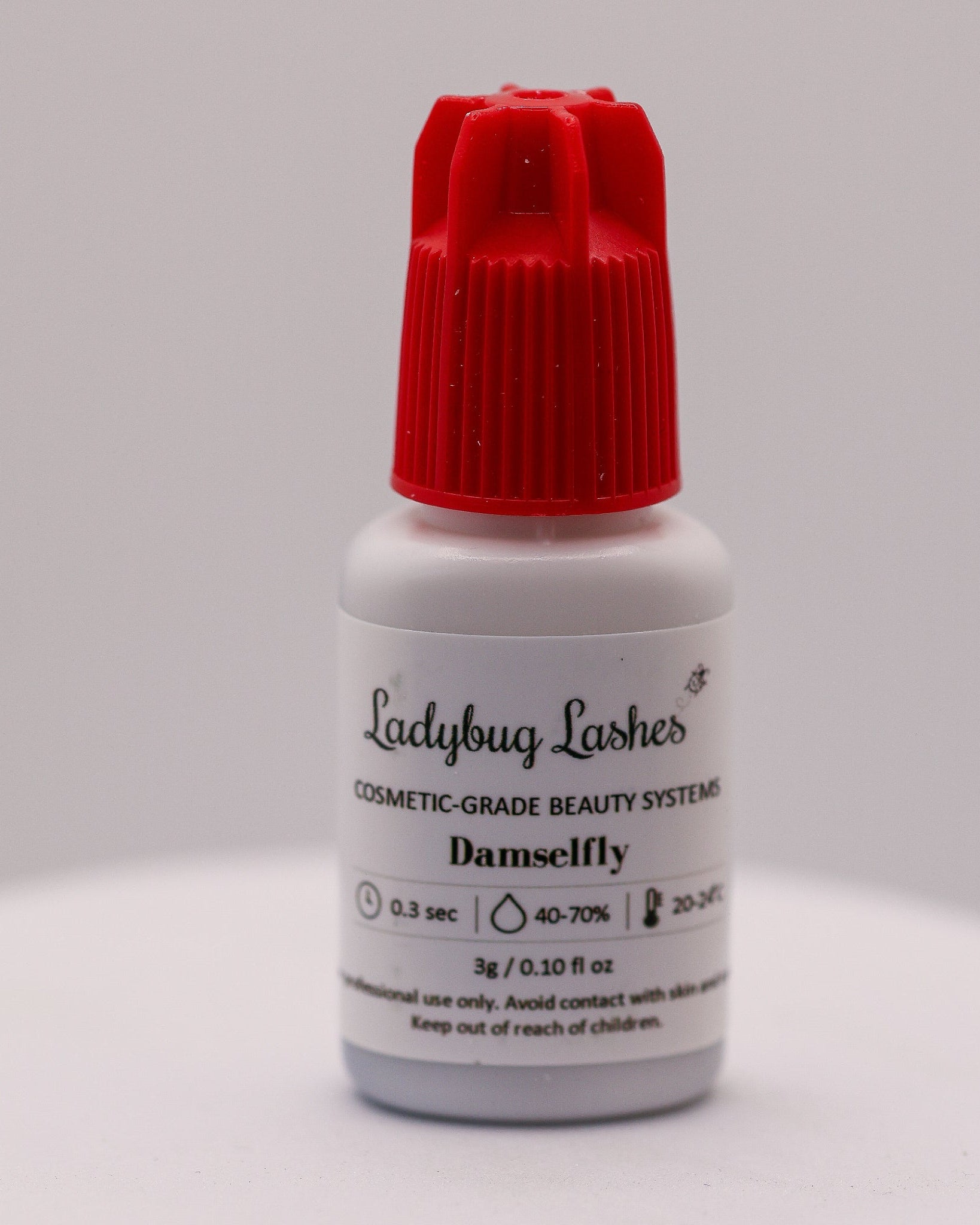
- lash adhesives with different drying speeds
- lash lift systems
- brow lamination systems
- tools and accessories
- professional kits
- training and education
Product Consistency
Consistency matters when products are being used in professional treatments.
Whether you are buying lash trays, adhesives, lifting products or accessories, reliable specifications help artists work with greater confidence and reduce unnecessary variation between appointments.
Ingredient Transparency
Professional artists should be able to access ingredient information before purchasing where relevant.
This is particularly important for adhesives, lash lift and brow lamination products, removers, primers and other professional-use liquids.
Education Over Marketing Claims
Terms such as “best”, “strongest”, “sensitive”, “works in every humidity” or “suitable for everyone” can sound reassuring, but they do not replace proper product information.
A professional supplier should explain how products actually behave, who they are intended for and where limitations may apply.
What Products Should a Professional Lash Supplier Offer?
A professional lash supplier may stock a wide range of products depending on the services they support.
Common categories include:
- lash extension trays
- classic and volume lashes
- premade and promade fans
- professional lash adhesives
- preparation liquids and bonders
- lash lift systems
- brow lamination systems
- shields and lifting tools
- tweezers and applicators
- tapes, eye pads and consumables
- aftercare products
- starter and professional kits
- education and training
The most important factor is not the size of the catalogue, but whether the products are clearly explained and suitable for the work you actually perform.
Professional Lash Supplies from Ladybug Lashes
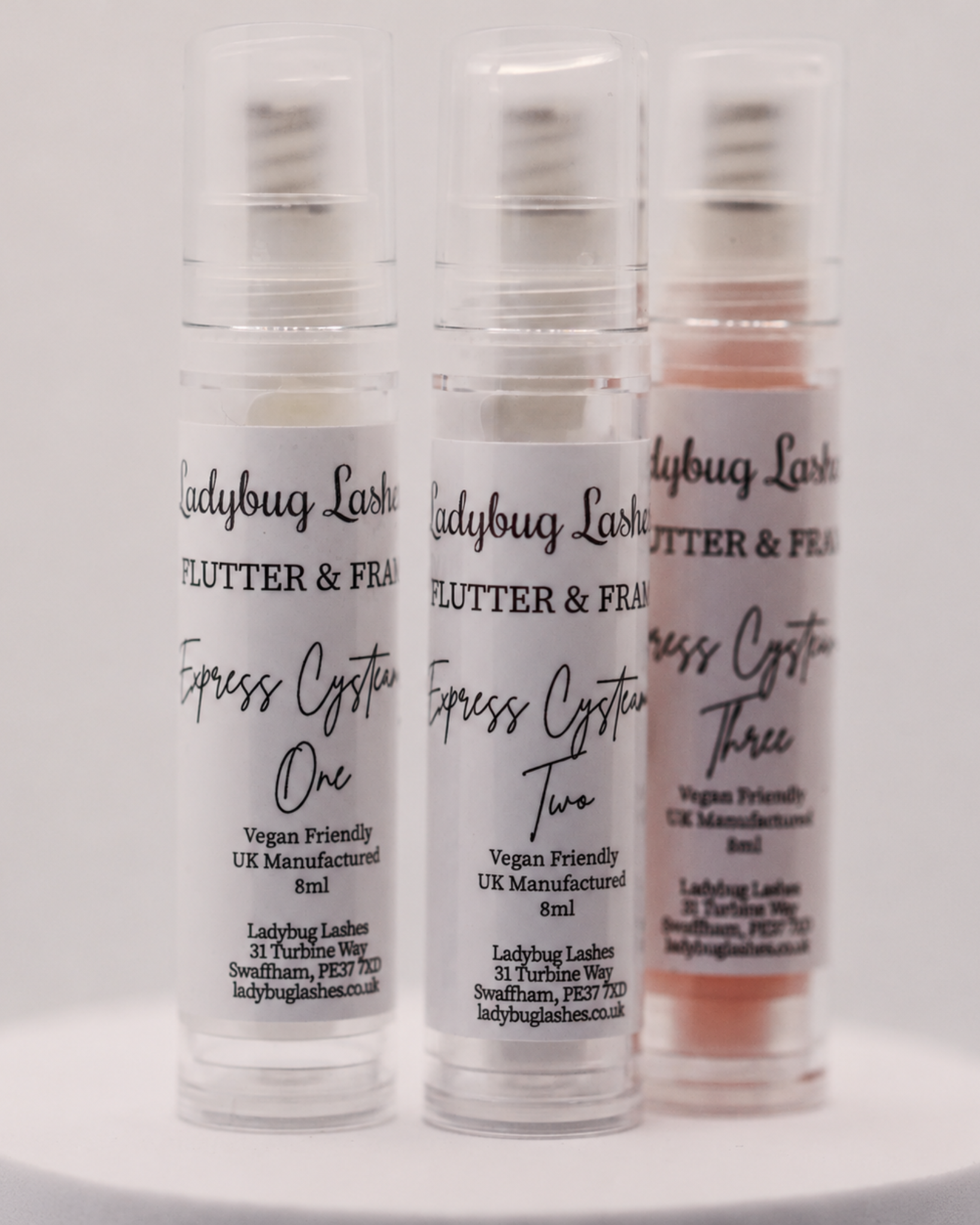
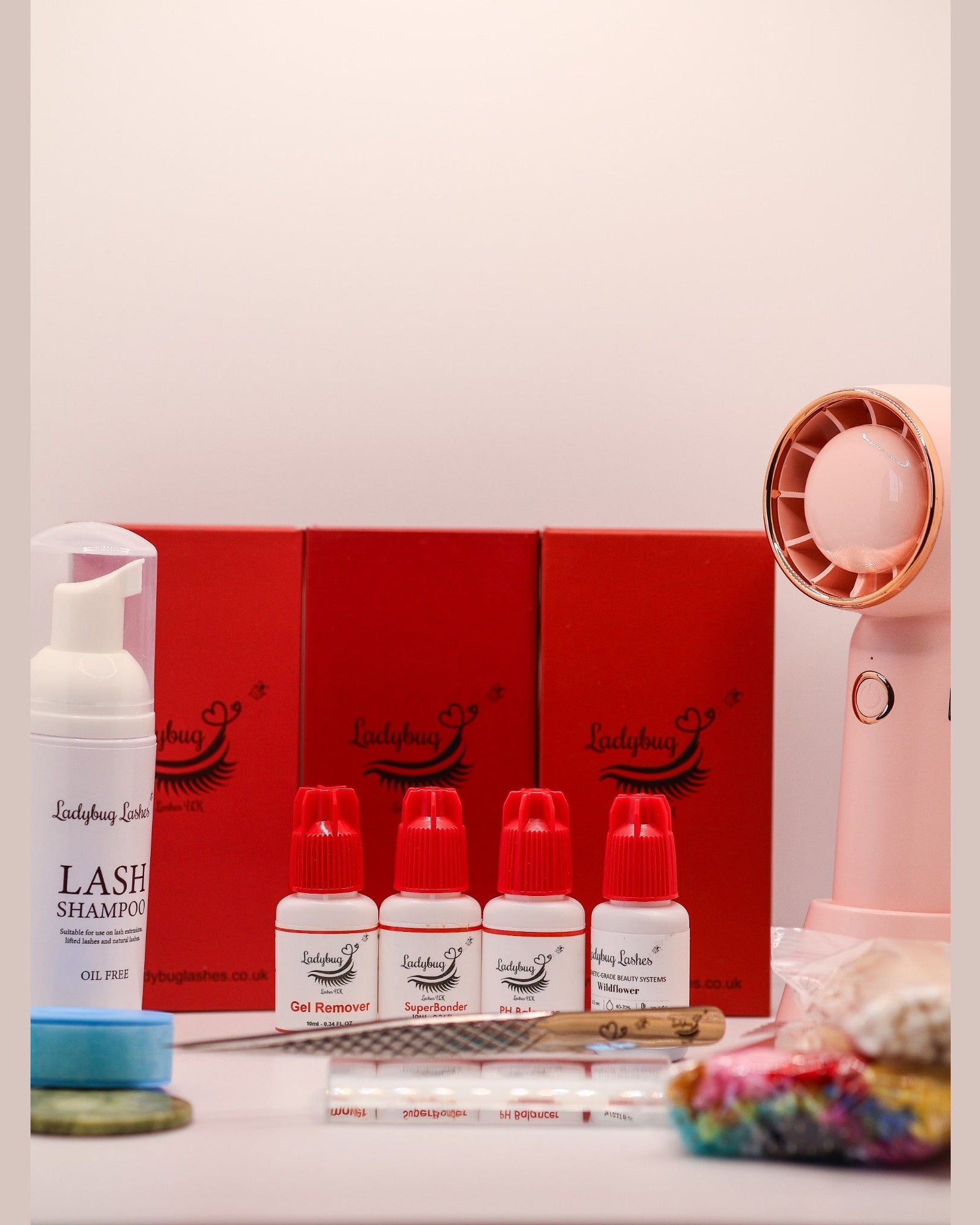
Ladybug Lashes supplies professional lash and brow artists with lash extension products, UK-made adhesives and liquids, lash lift and brow lamination systems, specialist lash trays, tools, kits and training.
Our approach focuses on ingredient transparency, professional education and clear product guidance so artists can choose products based on technique, working environment and treatment needs.
We also offer a broad selection of lash tray styles, including classic, volume, YY, Clover, Fairy, Angel, Wet Look, Anime, Promade, brown and coloured lashes.
Choosing the Right Supplier for Your Salon
The best supplier for your business is the one that gives you the right combination of product choice, reliable information, professional guidance and products that suit the way you work.
Before choosing a supplier, compare more than price alone. Look at product specifications, ingredient information, education, treatment guidance and whether the range supports the services you actually offer.
Built on evidence. Not marketing.
Join the Ladybug Lashes Artist Directory
Use Ladybug Lashes products in your lash or brow business? Complete the form below to apply to be listed in our Artist Directory.
By submitting this form you consent to your details being handled according to our privacy policy.
'%3e%3cg id='Final-Copy-2_2_' transform='translate(1275.000000, 200.000000)'%3e%3cpath class='st0' d='M7.4,12.8h6.8l3.1-11.6H7.4C4.2,1.2,1.6,3.8,1.6,7S4.2,12.8,7.4,12.8z'/%3e%3c/g%3e%3c/g%3e%3c/g%3e%3cg id='final---dec.11-2020'%3e%3cg id='_x30_208-our-toggle' transform='translate(-1275.000000, -200.000000)'%3e%3cg id='Final-Copy-2' transform='translate(1275.000000, 200.000000)'%3e%3cpath class='st1' d='M22.6,0H7.4c-3.9,0-7,3.1-7,7s3.1,7,7,7h15.2c3.9,0,7-3.1,7-7S26.4,0,22.6,0z M1.6,7c0-3.2,2.6-5.8,5.8-5.8 h9.9l-3.1,11.6H7.4C4.2,12.8,1.6,10.2,1.6,7z'/%3e%3cpath id='x' class='st2' d='M24.6,4c0.2,0.2,0.2,0.6,0,0.8l0,0L22.5,7l2.2,2.2c0.2,0.2,0.2,0.6,0,0.8c-0.2,0.2-0.6,0.2-0.8,0 l0,0l-2.2-2.2L19.5,10c-0.2,0.2-0.6,0.2-0.8,0c-0.2-0.2-0.2-0.6,0-0.8l0,0L20.8,7l-2.2-2.2c-0.2-0.2-0.2-0.6,0-0.8 c0.2-0.2,0.6-0.2,0.8,0l0,0l2.2,2.2L23.8,4C24,3.8,24.4,3.8,24.6,4z'/%3e%3cpath id='y' class='st3' d='M12.7,4.1c0.2,0.2,0.3,0.6,0.1,0.8l0,0L8.6,9.8C8.5,9.9,8.4,10,8.3,10c-0.2,0.1-0.5,0.1-0.7-0.1l0,0 L5.4,7.7c-0.2-0.2-0.2-0.6,0-0.8c0.2-0.2,0.6-0.2,0.8,0l0,0L8,8.6l3.8-4.5C12,3.9,12.4,3.9,12.7,4.1z'/%3e%3c/g%3e%3c/g%3e%3c/g%3e%3c/g%3e%3c/svg%3e) Your Privacy Choices
Your Privacy Choices