Korean-inspired lash lifting has become one of the most talked-about techniques in the lash industry.
But what actually makes it different from a traditional lash lift?
The biggest difference is not simply the lotion used.
It is the overall treatment approach - including lash preparation, shield choice, product placement, processing technique and how the lashes are styled.
Both traditional and Korean-inspired methods can produce beautiful results when they are carried out correctly.
The right choice depends on the natural lashes, the desired result and the technique the artist has been trained to use.
What Is a Traditional Lash Lift?
A traditional lash lift normally involves positioning the natural lashes onto a shield and using a lifting lotion to soften the hair structure so the lashes can be reshaped.
A neutralising or setting step then fixes the lashes into their new position.
Traditional systems may use different reducing agents depending on the formulation.
The final result can range from soft and natural to more dramatic depending on factors such as:
- Shield shape and size
- Lash placement
- Natural lash direction
- Product placement
- Processing
- Styling
So a traditional lash lift does not automatically mean a very strong curl.
What Is a Korean-Inspired Lash Lift?
Korean-inspired lash lifting refers to a group of modern techniques rather than one single treatment system.
Depending on the method being taught, it may involve:
- Flat shields during Step 1
- Adhesive-free Step 1 techniques
- Powder mixed with compatible lifting lotion
- Changing shields between processing and styling stages
- Hybrid or glueless shields
- Different approaches to lash direction and placement
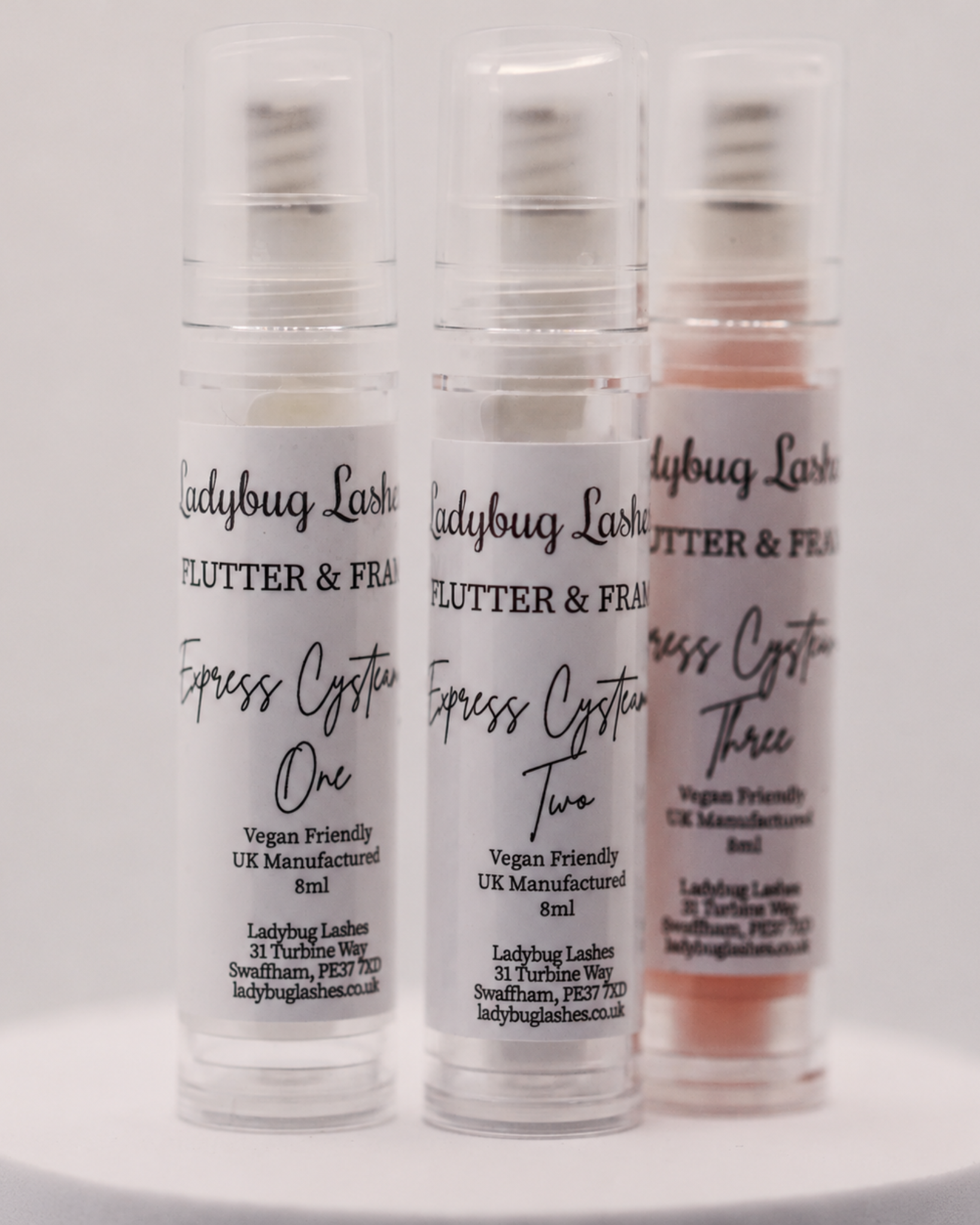
- Cysteamine-based systems
The focus is often on creating clean separation, controlled direction and a polished lifted result.
But there is no single rule saying every Korean lash lift must use exactly the same products or technique.
Is Korean Lash Lift the Same as Cysteamine Lash Lift?
No.
Cysteamine is a reducing agent used in some hair-waving and lash-lifting formulations.
It is commonly seen in Korean-inspired lash systems, but using cysteamine does not automatically make a treatment Korean.
Likewise, Korean-inspired techniques can involve more than simply changing the lifting lotion.
The technique matters just as much as the chemistry.
Is Cysteamine Gentler Than Traditional Lash Lift Lotion?
This needs more context.
Different reducing agents and formulations can affect hair differently, and there is research comparing cysteamine-based and thioglycolate-based waving products. But that does not justify saying cysteamine is universally harmless, natural or suitable for sensitive clients. Cysteamine is also a recognised potential contact sensitiser.
What matters is the complete formulation, concentration, pH, processing time and correct professional use.
No lifting lotion should be treated as incapable of damaging hair if it is overprocessed.
Which Method Gives a More Natural Result?
Either can.
Korean-inspired techniques are often associated with clean, elongated and highly separated styling, but the final result still depends on:
- The client’s natural lashes
- Shield selection
- Direction
- Product placement
- Technique
- Desired finish
A traditional lash lift can be soft and natural.
A Korean-inspired lift can be more dramatic.
It is better to think of these as different techniques and styling options, rather than “natural versus dramatic”.
What Role Do Flat Shields Play?
Flat shields are commonly used during some Korean-inspired techniques to allow the lashes to be processed in a straighter position during Step 1.
The lashes can then be repositioned onto a different shield for the setting stage.
This gives the artist another way of controlling the final shape and direction.
It is one of the reasons proper training is important: simply purchasing flat shields does not teach you when or how to use them.
What Is Adhesive-Free Step 1?
Some Korean-inspired methods allow Step 1 to be carried out without fixing the lashes to the shield using traditional lash-lift adhesive.
This can change the way the lifting lotion is applied and how the lashes are controlled during processing.
It does not mean the whole treatment is necessarily glue-free, and it is not automatically suitable for every system.
Only use this technique with compatible products and appropriate training.
What Does Powder Lift Do?
Powder Lift can be mixed into a compatible lifting lotion to create a thicker, more controllable consistency.
This can support specific Korean-inspired application methods, particularly adhesive-free techniques.
It should not be treated as something that simply makes the lotion “stronger”.
The amount used and products it is combined with should follow the relevant training and product guidance.
Is Korean Lash Lifting Better for Lash Health?
I would not say one technique is automatically healthier.
Lash health depends primarily on correct assessment, product use and processing.
Both traditional and Korean-inspired systems alter the hair chemically.
Either can produce healthy-looking, well-conditioned results when used correctly.
Either can also compromise the lashes if overprocessed or used on unsuitable hair.
The technique should never be used as a reason to process lashes that are already chemically compromised.
Can Korean Lash Lifting Prevent Overprocessing?
No technique can guarantee that.
The risk is reduced through:
- Correct lash assessment
- Appropriate processing
- Readiness checks
- Accurate product placement
- Suitable products
- Following manufacturer guidance
- Good professional training
This is why understanding the technique matters more than simply purchasing products labelled “Korean”.
Which Is Better: Korean or Traditional Lash Lift?
Neither is automatically better.
A trained lash artist may choose between techniques depending on:
- Natural lash direction
- Lash length
- Hair condition
- Desired result
- Products available
- Their training and experience
Having more than one technique available simply gives the artist more ways to customise the treatment.
Should Lash Artists Learn Korean-Inspired Techniques?
If you are already lash lift trained and want to expand the ways you can work with different natural lashes, additional Korean-inspired training can be worthwhile.
It can help you understand:
- Flat-shield processing
- Adhesive-free Step 1
- Powder Lift
- Alternative shield techniques
- Styling and direction
- Processing assessment
But Korean-inspired training should add to your existing lash-lift knowledge - not replace the fundamentals.
The Bottom Line
The difference between Korean-inspired and traditional lash lifting is not simply cysteamine versus thioglycolate or natural versus dramatic results.
The main differences lie in the technique, product placement, shield use, processing approach and styling options available to the artist.
Both approaches can produce excellent results.
The best method is the one that suits the natural lashes, the desired outcome and the professional system the artist is trained to use.
Korean-inspired lash lifting gives lash artists another set of tools - not a universally “better” version of lash lifting.
.