
You've isolated the natural lash, dipped your extension into the adhesive, gone to place it...
And it won't stick.
Or perhaps it attaches for a second and then pops straight back off.
When this happens, it's tempting to immediately blame the lash glue. But an extension that won't attach can actually tell you quite a lot about what's happening during application.
The problem could be your adhesive speed, room conditions, lash preparation, adhesive amount or simply the time between dipping and placement.
The trick is learning to read what your adhesive is telling you.
Why Does My Lash Extension Pop Straight Back Off During Application?
One of the first things to consider is whether your adhesive is curing too quickly.
Cyanoacrylate lash adhesive begins curing when it comes into contact with moisture.
If your adhesive starts curing before you've achieved good contact between the extension and natural lash, you may struggle to create a proper bond.
The extension may appear to attach but then pop straight back off.
This can happen if:
- Your adhesive is too fast for your application speed
- Your room is warmer than usual
- Humidity has increased
- You're taking too long between dipping and placement
- Your glue dot has started to cure
- You're using too little adhesive
If you're suddenly experiencing pop-offs when you normally don't, check your environment before assuming there's something wrong with your bottle.
How Do I Know if My Lash Glue Is Too Fast for Me?
Your adhesive should give you enough working time to dip, place and achieve good attachment before it cures.
If the glue is beginning to cure before you've completed your placement, it's too fast for the way you're currently working.
Signs can include:
- Extensions popping back off
- Difficulty getting the extension to attach
- Feeling like you have to rush your placement
- Poor attachment despite using enough adhesive
- Retention problems afterwards
A faster adhesive isn't automatically a better adhesive.
Your glue needs to match your application speed.
If you're constantly racing your adhesive, moving to a slightly slower glue can actually improve your application and retention.
What Happens if My Lash Glue Is Drying Too Slowly?
The opposite problem can happen too.
If your adhesive is curing too slowly, the extension may:
- Slide along the natural lash
- Move after you've placed it
- Lean to one side
- Stick to neighbouring lashes
- Contribute to stickies
This can happen when your room conditions are cooler or drier, or when you're using an adhesive that's too slow for your application speed.
An easy way to remember it is:
Extensions popping off during placement? Your adhesive may be curing too quickly.
Extensions sliding around or creating stickies? Your adhesive may be curing too slowly.
Can Temperature and Humidity Stop Lash Extensions Sticking?
They can affect how easily you're able to create the bond.
Cyanoacrylate adhesive cures in response to moisture, so humidity directly affects curing speed.
Higher humidity generally speeds curing.
Lower humidity generally slows it.
Temperature can affect adhesive behaviour too. Warmer conditions can make the adhesive thinner and faster, while cooler conditions can make it thicker and slower.
This is why an adhesive that behaved beautifully last week can suddenly feel completely different during a heatwave or particularly dry weather.
Always monitor your lash room with a hygrometer rather than guessing.
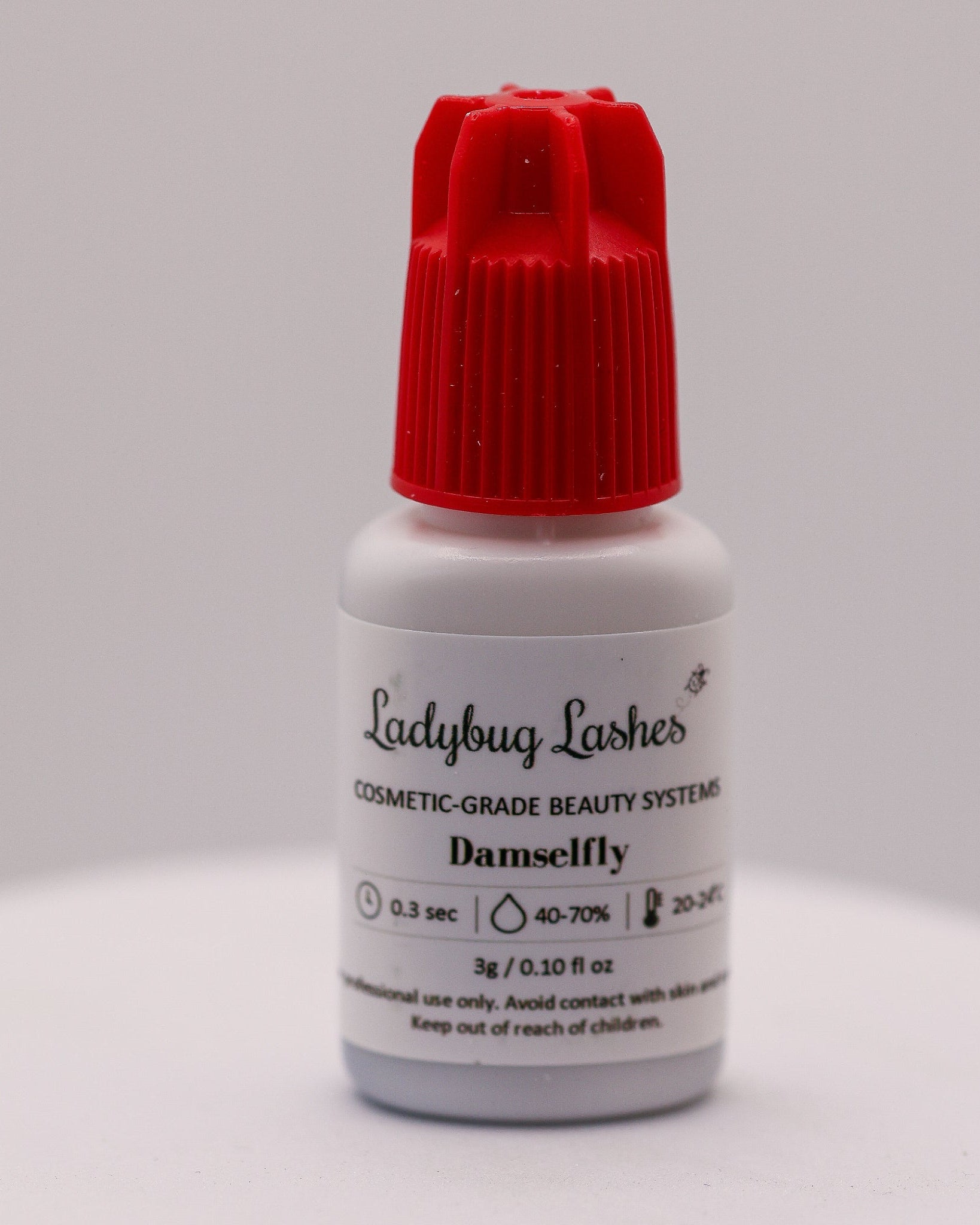
For Ladybug Lashes cosmetic-grade adhesives, our ideal working environment is around 20–24°C and approximately 55% humidity.
Can Dirty Natural Lashes Stop Extensions Bonding Properly?
Yes.
Natural lashes should be properly cleansed before application.
Oil, makeup, skincare, dust and other residue can interfere with the surface you're trying to bond to.
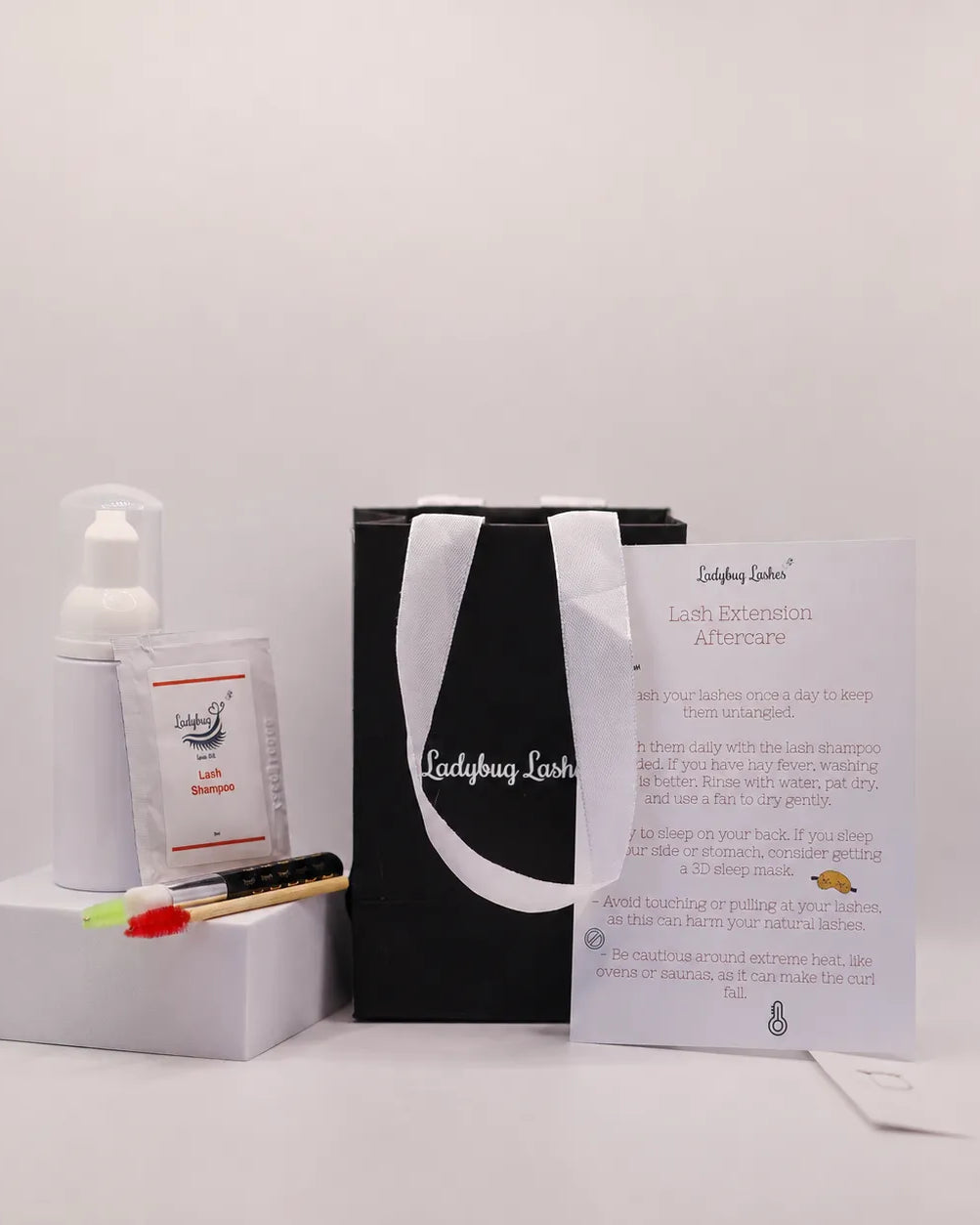
Wash the lashes thoroughly with lash shampoo, rinse properly and ensure they're completely dry before beginning application.
And don't forget the rinse.
Using lash shampoo and then leaving cleanser residue behind isn't proper lash preparation.
You want a clean, rinsed and dry natural lash before you start.
Which Lash Prep Product Should I Use?
Once the natural lashes are clean, rinsed and dry, you can choose the appropriate prep product.
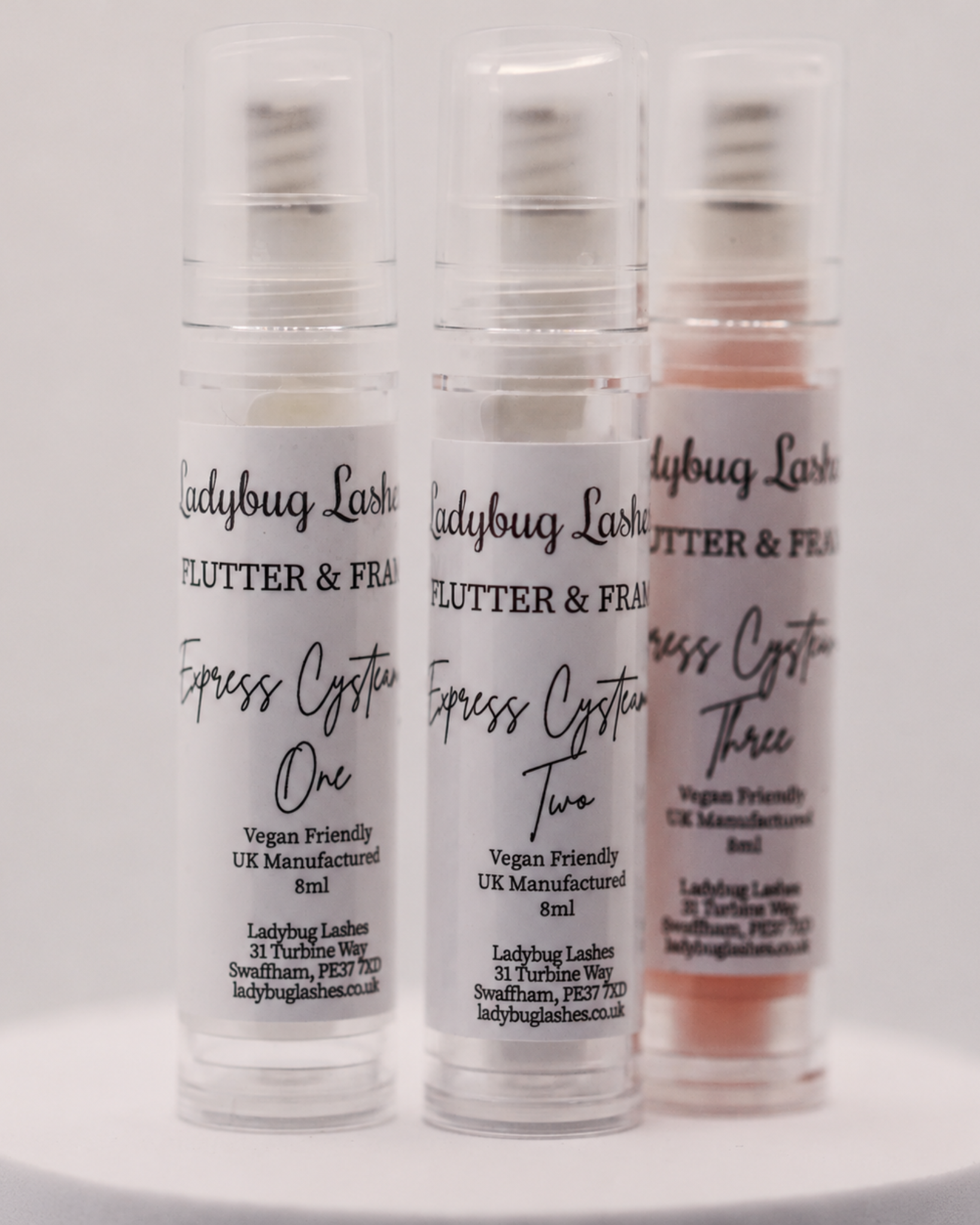
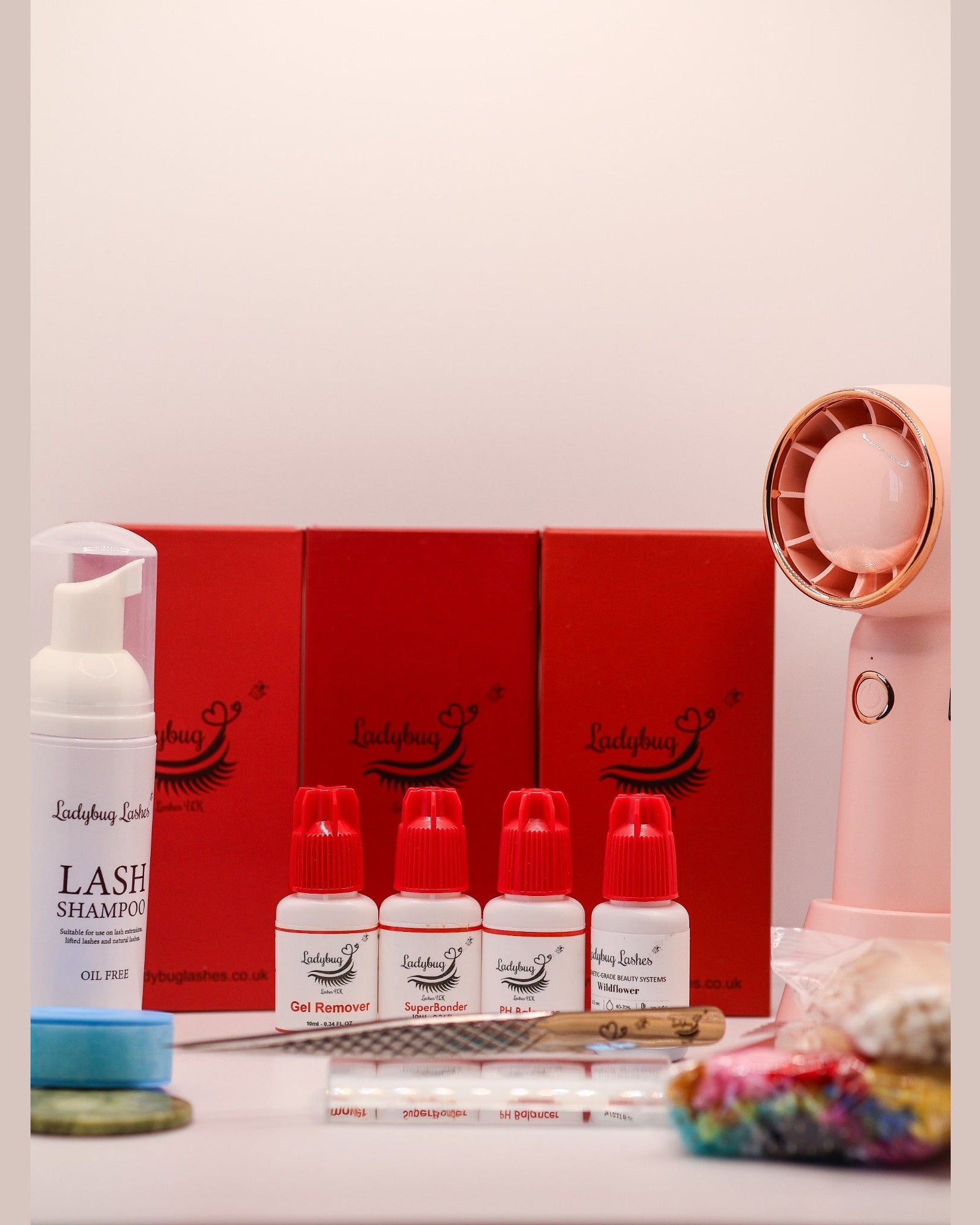
At Ladybug Lashes, we offer pH Balancer and Glue Retention Booster, which have different jobs.
pH Balancer
Our pH Balancer helps prepare and balance the natural lash surface for bonding.
It can be used as part of your lash preparation to create a clean, balanced surface for adhesive application.
Glue Retention Booster
Our Glue Retention Booster helps speed up adhesive curing.
It can be particularly useful in lower humidity conditions or when your adhesive is behaving too slowly.
It should be used sparingly - you don't need to saturate the natural lashes or lash strip.
The important thing is understanding why you're using your prep product.
If your adhesive is already curing too quickly and you're experiencing pop-offs, using a product designed to speed curing further isn't going to solve the problem.
Choose your prep according to the natural lashes, environment and behaviour of your adhesive.
Can Using Too Little Lash Glue Cause Extensions to Pop Off?
Yes.
You need enough adhesive to create a proper bond between the extension and natural lash.
If you barely touch the extension into the adhesive because you're worried about using “too much glue”, you can end up at the opposite extreme.
Too little adhesive can mean insufficient bonding.
The aim isn't to use as little glue as physically possible.
It's to use the correct amount for a clean, secure attachment.
Likewise, excessive adhesive isn't the answer either.
Good application is about balance.
Does Attachment Area Matter?
Absolutely.
The extension needs sufficient contact with the natural lash to create a secure attachment.
Simply touching the extension against the natural lash isn't enough.
Curl choice can also affect this.
If the extension curl works strongly against the direction of the client's natural lash, you may have less contact area available for attachment.
This is why choosing extensions should involve looking at the natural lash direction as well as the finished style you want to create.
Am I Taking Too Long Between Dipping and Placement?
Possibly.
Your adhesive curing time needs to match your working speed.
For example, if you're using a very fast adhesive but you're still adjusting your placement after dipping, the adhesive may already have started curing before you've created the attachment.
This is why we don't believe every lash artist should simply buy the fastest glue available.
At Ladybug Lashes, we offer different adhesive speeds because different artists work at different speeds.
A slightly slower adhesive that gives you time to achieve good attachment can be far more useful than a lightning-fast adhesive you're constantly fighting against.
Could My Glue Dot Need Changing?
Yes — but don't change it simply because a timer tells you to.
Look at the glue dot.
Has the consistency changed?
Is the surface beginning to cure?
Is pickup behaving differently?
Is the adhesive becoming difficult to work with?
If so, dispense a fresh dot.
But if your adhesive is still behaving perfectly well, you don't need to throw it away simply because 15 or 20 minutes have passed.
With Ladybug Lashes cosmetic-grade adhesives, a glue dot can sometimes remain workable for 45 minutes to an hour, depending on the adhesive and room conditions.
Watch your glue, not your timer.
Is My Lash Glue Bad?
Possibly — but don't make that your first conclusion.
If your adhesive has previously worked well and suddenly your extensions won't attach, ask yourself:
Has my room temperature changed?
Has my humidity changed?
Are the client's lashes properly clean, rinsed and dry?
Am I using the correct prep product for what my adhesive is doing?
Has my application speed changed?
Is my glue dot still behaving normally?
Am I using enough adhesive?
Am I achieving sufficient attachment?
If everything else is correct and the adhesive itself is behaving unusually, then investigate the bottle.
But changing bottles won't fix an environmental, preparation or application problem.
Should I Use a Faster Lash Glue if My Extensions Won't Stick?
Not automatically.
In fact, if your extensions are popping straight back off, going faster could make the problem worse.
You need to establish whether your adhesive is curing too quickly or too slowly first.
Remember:
Pop-offs can indicate the adhesive is too fast.
Sliding and stickies can indicate the adhesive is too slow.
Choose an adhesive that works with your speed, rather than choosing one simply because it has the fastest curing time.
What Should I Check if My Lash Extensions Won't Stick?
Keep it simple.
Check these six things:
1. Your environment
Has the temperature or humidity changed?
2. Your adhesive speed
Does it actually match how quickly you work?
3. Your lash preparation
Are the natural lashes clean, properly rinsed and completely dry?
4. Your prep product
Are you using your pH Balancer or Glue Retention Booster for the right reason?
5. Your adhesive amount
Are you using enough to create a secure bond without overloading?
6. Your attachment
Are you creating sufficient contact between the extension and natural lash?
If your adhesive normally performs well, something changing in one of these areas can be enough to change how it behaves.
Final Thoughts
If your lash extensions won't stick to the natural lash, don't immediately throw your adhesive bottle away.
Look at how the extension is behaving.
If it attaches and immediately pops off, your adhesive may be curing too quickly.
If it slides or moves after placement, it may be curing too slowly.
Then check your temperature, humidity, lash preparation, prep product, adhesive amount, application speed and attachment.
Good lash application isn't about finding the fastest glue possible.
It's about finding an adhesive that gives you enough time to create a clean, secure bond.
Don't fight your adhesive. Choose one that works at your speed.
'%3e%3cg id='Final-Copy-2_2_' transform='translate(1275.000000, 200.000000)'%3e%3cpath class='st0' d='M7.4,12.8h6.8l3.1-11.6H7.4C4.2,1.2,1.6,3.8,1.6,7S4.2,12.8,7.4,12.8z'/%3e%3c/g%3e%3c/g%3e%3c/g%3e%3cg id='final---dec.11-2020'%3e%3cg id='_x30_208-our-toggle' transform='translate(-1275.000000, -200.000000)'%3e%3cg id='Final-Copy-2' transform='translate(1275.000000, 200.000000)'%3e%3cpath class='st1' d='M22.6,0H7.4c-3.9,0-7,3.1-7,7s3.1,7,7,7h15.2c3.9,0,7-3.1,7-7S26.4,0,22.6,0z M1.6,7c0-3.2,2.6-5.8,5.8-5.8 h9.9l-3.1,11.6H7.4C4.2,12.8,1.6,10.2,1.6,7z'/%3e%3cpath id='x' class='st2' d='M24.6,4c0.2,0.2,0.2,0.6,0,0.8l0,0L22.5,7l2.2,2.2c0.2,0.2,0.2,0.6,0,0.8c-0.2,0.2-0.6,0.2-0.8,0 l0,0l-2.2-2.2L19.5,10c-0.2,0.2-0.6,0.2-0.8,0c-0.2-0.2-0.2-0.6,0-0.8l0,0L20.8,7l-2.2-2.2c-0.2-0.2-0.2-0.6,0-0.8 c0.2-0.2,0.6-0.2,0.8,0l0,0l2.2,2.2L23.8,4C24,3.8,24.4,3.8,24.6,4z'/%3e%3cpath id='y' class='st3' d='M12.7,4.1c0.2,0.2,0.3,0.6,0.1,0.8l0,0L8.6,9.8C8.5,9.9,8.4,10,8.3,10c-0.2,0.1-0.5,0.1-0.7-0.1l0,0 L5.4,7.7c-0.2-0.2-0.2-0.6,0-0.8c0.2-0.2,0.6-0.2,0.8,0l0,0L8,8.6l3.8-4.5C12,3.9,12.4,3.9,12.7,4.1z'/%3e%3c/g%3e%3c/g%3e%3c/g%3e%3c/g%3e%3c/svg%3e) Your Privacy Choices
Your Privacy Choices