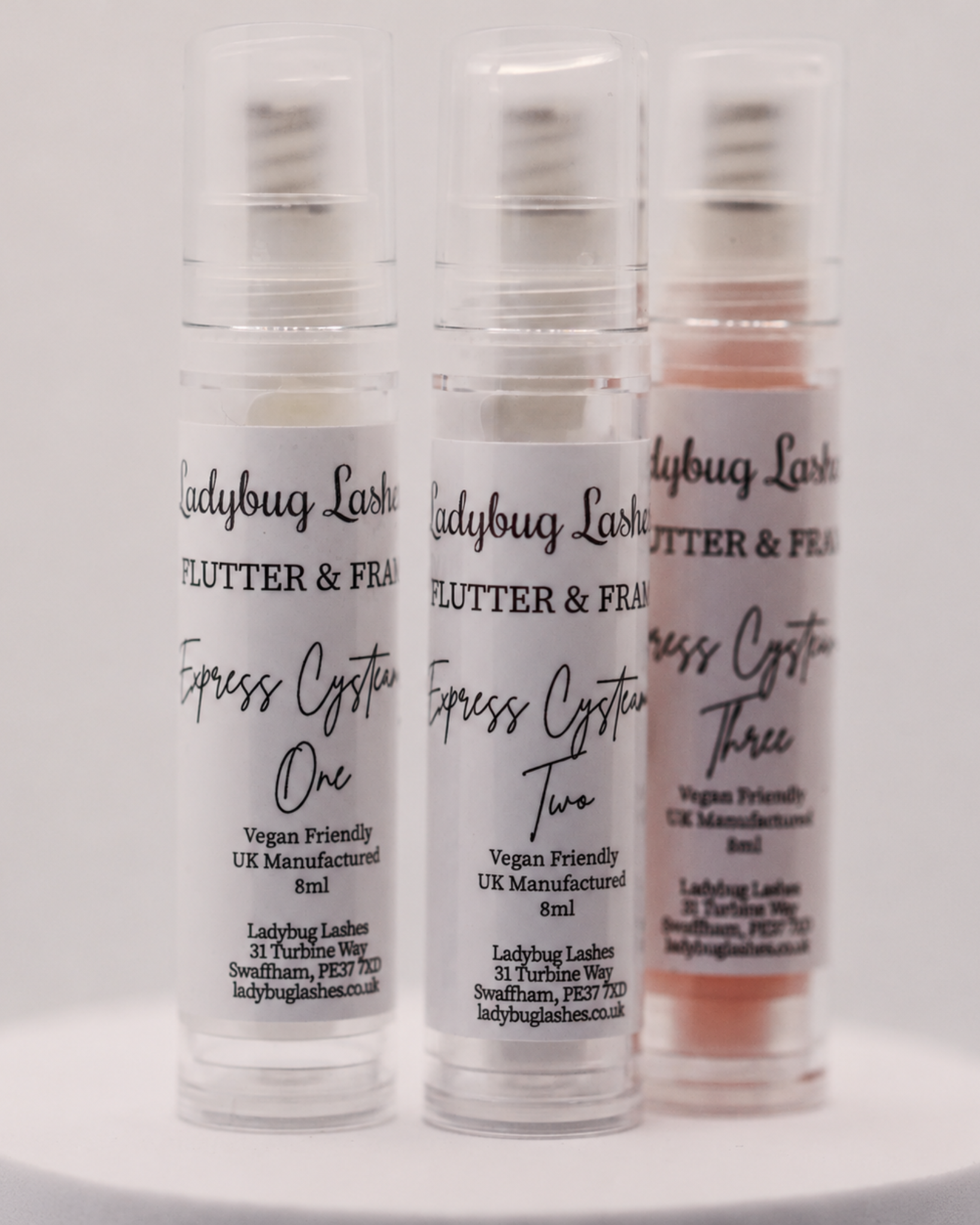
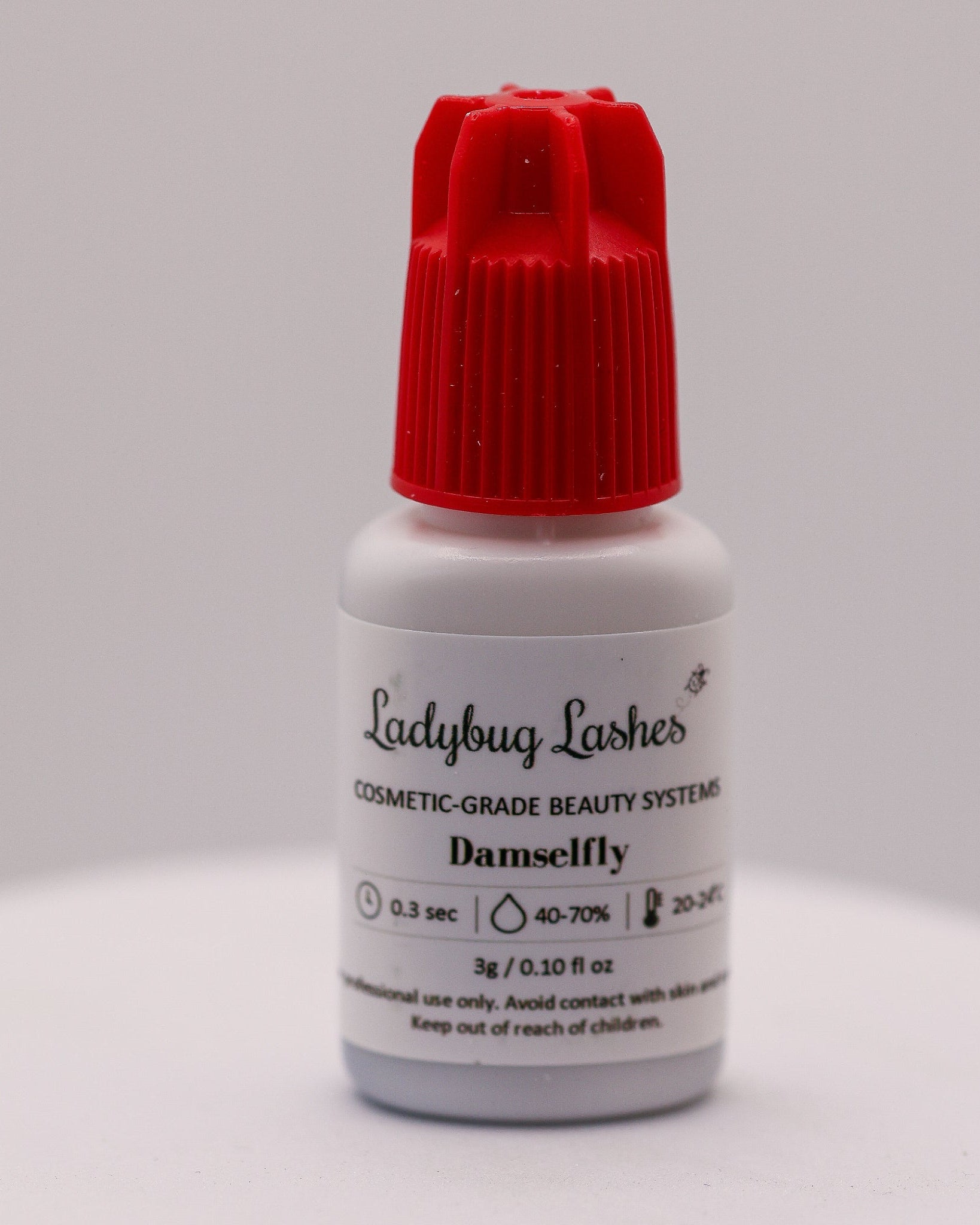
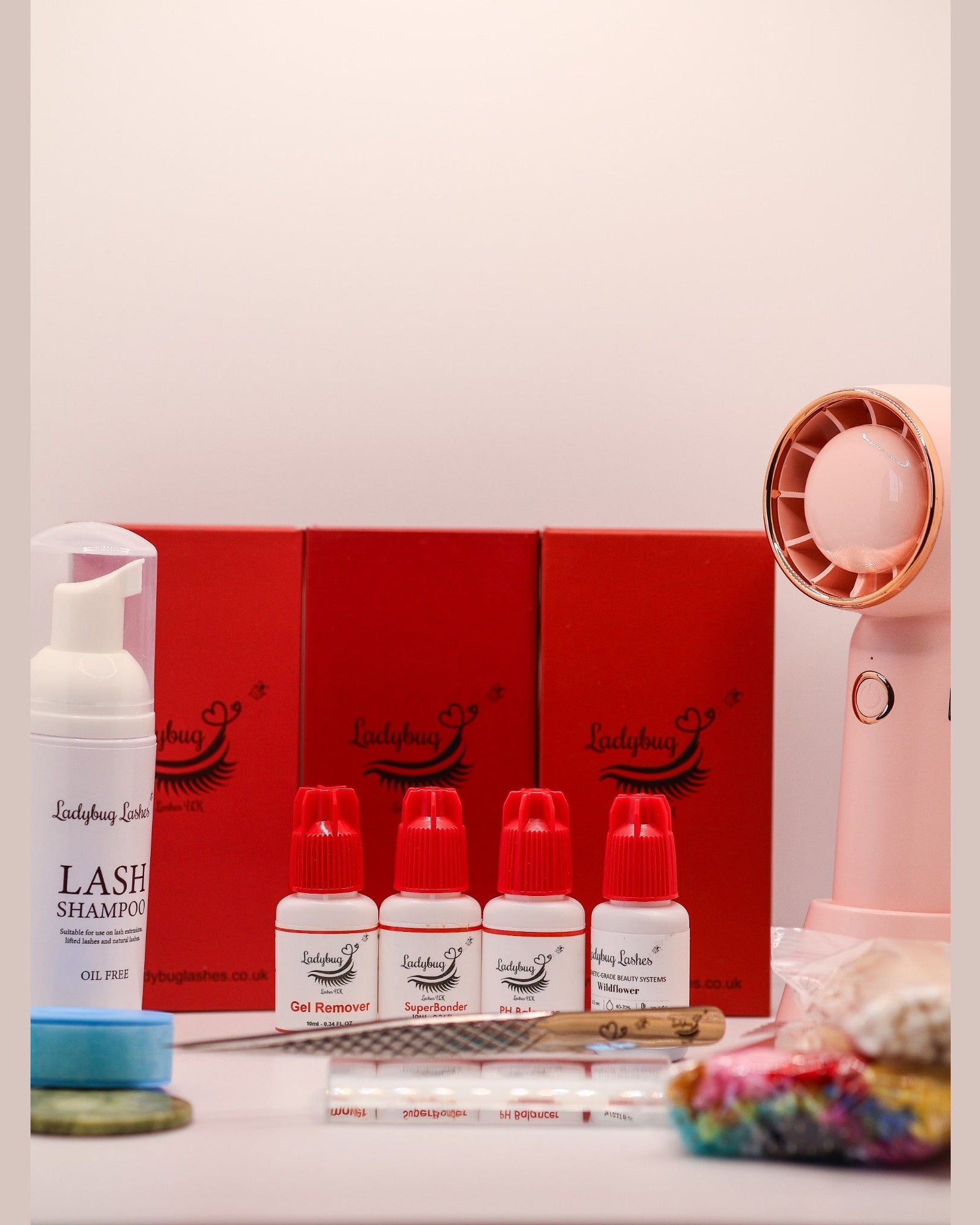
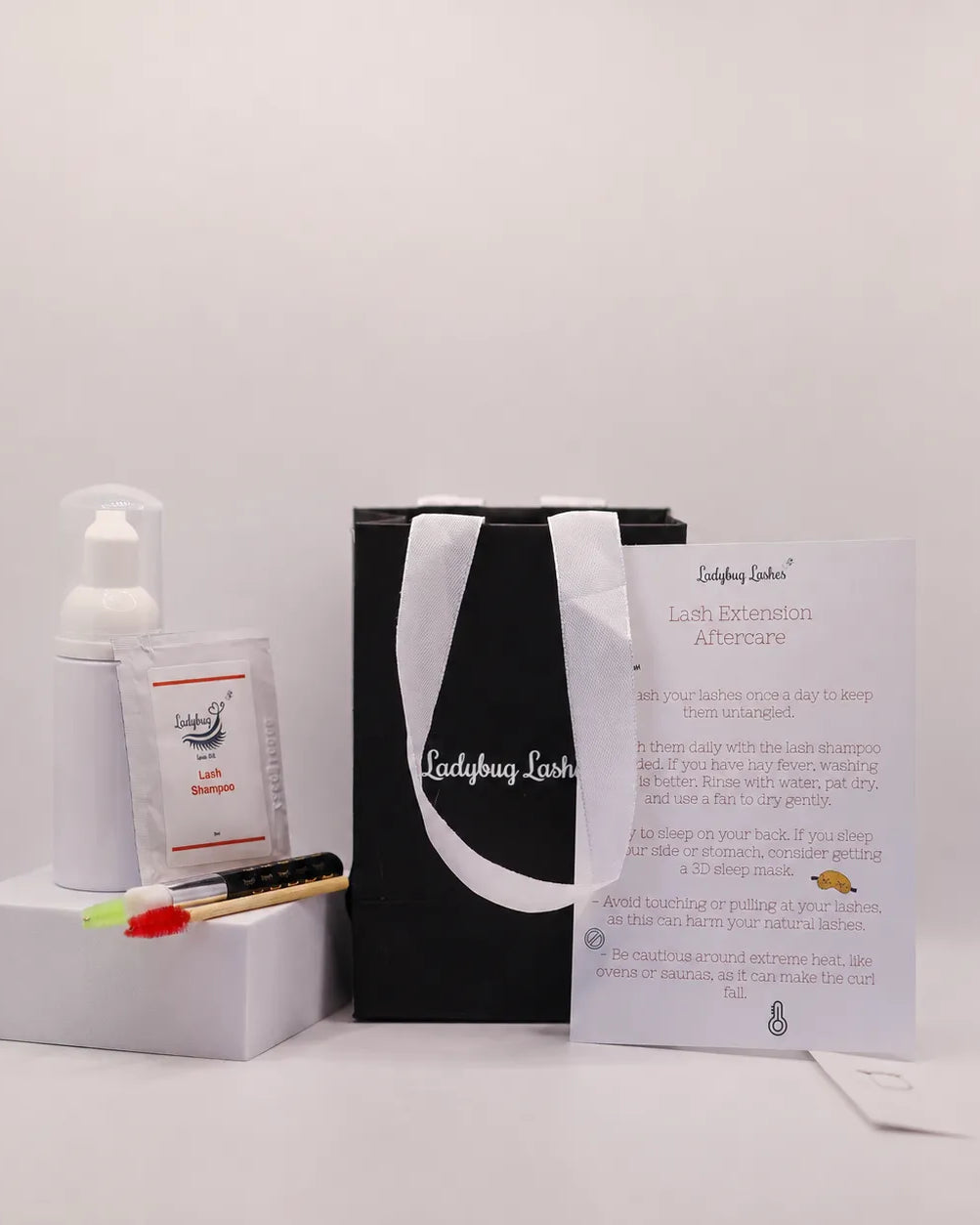
Have a look at the professional products on your trolley.
Your lash adhesive, lash shampoo, lash lift and brow lamination lotions, aftercare products and other liquids.
Now look at the bottle, sachet or tube and any packaging or information supplied with it.
Do you know what you're actually looking for?
You don't need to be a cosmetic chemist or understand pages of UK regulations. But there are some simple things every professional can check.
1. Can You Find a Batch Number?
A cosmetic product should have a batch number or other identification reference.
This allows the product to be traced back to its manufacturing batch - particularly important if a problem is ever reported.
On very small products, some information may be on the outer packaging rather than the bottle itself.
So check the bottle AND the packaging it came in.
If you can't find any batch identification, ask your supplier where it is.
2. Can You Find the Ingredients?
Cosmetic products require an ingredient declaration.
That doesn't mean every ingredient has to be squeezed onto a tiny lash adhesive bottle. The full ingredient list may be provided on the outer packaging, and there are provisions for certain information to be supplied with the product in another permitted way where space genuinely makes labelling impractical.
So don't immediately assume a product isn't compliant because the complete ingredient list isn't printed directly on the bottle.
Instead ask:
Where is the full ingredient list?
Check the box and any accompanying product information too.
3. Can You Identify the Responsible Person and Address?
Cosmetic products made available in Great Britain need a Responsible Person.
In simple terms, this is the person or business legally responsible for ensuring the cosmetic meets the applicable requirements.
Look for the name or registered name AND address of the Responsible Person on the product labelling.
A website address or social media account isn't a replacement for the required name and physical address.
If you can't identify the Responsible Person and their address, that's something worth asking your supplier about.
4. Are There Appropriate Warnings and Instructions?
Look for the warnings and precautions supplied with the product.
These will vary depending on what the product is, its formulation and how it's intended to be used.
And importantly:
“For Professional Use Only” doesn't mean the other cosmetic requirements don't apply.
Cosmetic legislation also covers products used by professionals on members of the public.
5. Is the Country of Origin Shown?
For imported cosmetic products, the country of origin forms part of the labelling requirements.
But don't judge compliance simply by where something was manufactured.
Seeing “Made in Korea” or “Made in China” doesn't prove that a product is compliant or non-compliant.
What matters is whether the requirements have actually been met.
But It Has an MSDS...
An SDS - often still called an MSDS - contains useful safety information.
But an MSDS alone isn't proof that a cosmetic product has met all of its cosmetic regulatory requirements.
There are other things that should exist behind the scenes, including an appropriate cosmetic safety assessment, product documentation and notification for the Great Britain market.
You don't need to understand how to produce all of those documents as a lash or brow artist.
Your supplier and Responsible Person do.
What Can't You Tell From a Bottle?
This bit is important.
You can't prove that a cosmetic is fully compliant simply because its packaging looks right.
Some requirements happen behind the scenes and aren't visible on the bottle.
Equally, don't immediately declare something non-compliant because one piece of information isn't printed on a tiny container. Check its outer packaging and the information supplied with it first.
If something still appears to be missing, ask.
Five Simple Questions to Ask Your Supplier
If you're unsure about a professional cosmetic you're using:
Where is the batch number?
Where can I find the full ingredient list?
Who is the Responsible Person and what is their address?
Has the product had the appropriate cosmetic safety assessment?
Has it been notified for the Great Britain market?
You don't need to know how to create a CPSR or PIF.
You just need to know that the appropriate work should have been done before the product reaches your trolley.
Professional Products Deserve Professional Standards
Beautiful packaging doesn't prove compliance.
A big social media following doesn't prove compliance.
An MSDS alone doesn't prove cosmetic compliance.
And writing “Professional Use Only” on a bottle doesn't make the regulations disappear.
We're using these products professionally on and around people's eyes, lashes, brows and skin.
It's reasonable to ask questions about what you're using.
So pick up the products on your trolley.
Check the bottle. Check the packaging. And if something doesn't look right, ask.
'%3e%3cg id='Final-Copy-2_2_' transform='translate(1275.000000, 200.000000)'%3e%3cpath class='st0' d='M7.4,12.8h6.8l3.1-11.6H7.4C4.2,1.2,1.6,3.8,1.6,7S4.2,12.8,7.4,12.8z'/%3e%3c/g%3e%3c/g%3e%3c/g%3e%3cg id='final---dec.11-2020'%3e%3cg id='_x30_208-our-toggle' transform='translate(-1275.000000, -200.000000)'%3e%3cg id='Final-Copy-2' transform='translate(1275.000000, 200.000000)'%3e%3cpath class='st1' d='M22.6,0H7.4c-3.9,0-7,3.1-7,7s3.1,7,7,7h15.2c3.9,0,7-3.1,7-7S26.4,0,22.6,0z M1.6,7c0-3.2,2.6-5.8,5.8-5.8 h9.9l-3.1,11.6H7.4C4.2,12.8,1.6,10.2,1.6,7z'/%3e%3cpath id='x' class='st2' d='M24.6,4c0.2,0.2,0.2,0.6,0,0.8l0,0L22.5,7l2.2,2.2c0.2,0.2,0.2,0.6,0,0.8c-0.2,0.2-0.6,0.2-0.8,0 l0,0l-2.2-2.2L19.5,10c-0.2,0.2-0.6,0.2-0.8,0c-0.2-0.2-0.2-0.6,0-0.8l0,0L20.8,7l-2.2-2.2c-0.2-0.2-0.2-0.6,0-0.8 c0.2-0.2,0.6-0.2,0.8,0l0,0l2.2,2.2L23.8,4C24,3.8,24.4,3.8,24.6,4z'/%3e%3cpath id='y' class='st3' d='M12.7,4.1c0.2,0.2,0.3,0.6,0.1,0.8l0,0L8.6,9.8C8.5,9.9,8.4,10,8.3,10c-0.2,0.1-0.5,0.1-0.7-0.1l0,0 L5.4,7.7c-0.2-0.2-0.2-0.6,0-0.8c0.2-0.2,0.6-0.2,0.8,0l0,0L8,8.6l3.8-4.5C12,3.9,12.4,3.9,12.7,4.1z'/%3e%3c/g%3e%3c/g%3e%3c/g%3e%3c/g%3e%3c/svg%3e) Your Privacy Choices
Your Privacy Choices