Patch testing is one of those subjects in the lash industry where the advice can feel anything but straightforward.
One insurer may tell you to follow the manufacturer's instructions. Another may have its own patch-testing requirements. Some manufacturers require patch testing, while others do not.
It is hardly surprising that lash artists are confused.
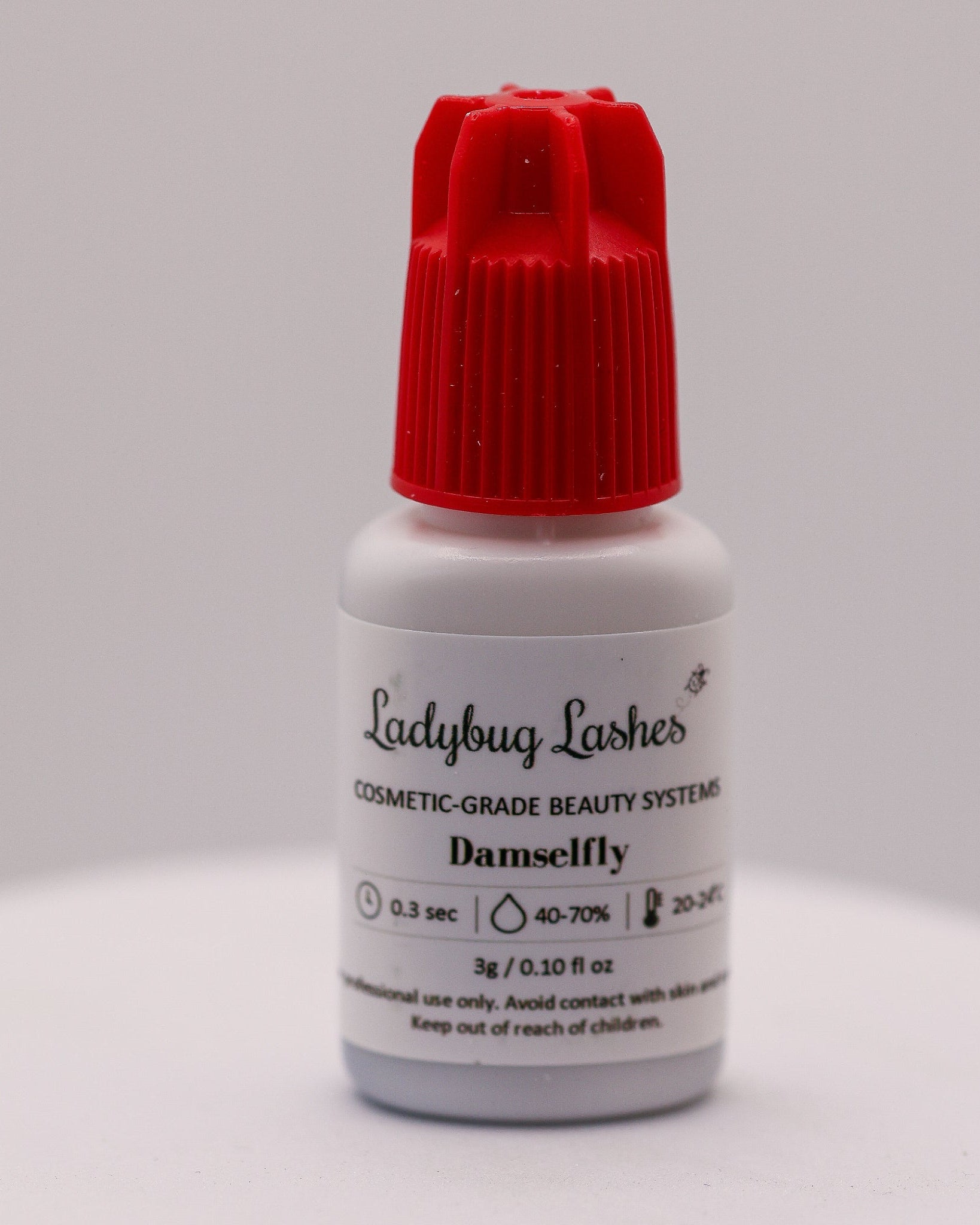
At Ladybug Lashes, however, we have made our position clear: we require a patch test before using our lash adhesives on a new client.
And yes, we know that costs us sales.
We've Been Told So
We have had lash artists tell us directly that they will not buy our adhesive because we require patch testing.
From a purely commercial point of view, there would be an obvious solution: remove the requirement.
It would make buying our adhesive easier. It would remove an objection to purchasing. And potentially, we would sell more glue.
But we are not going to do that.
Because we do not believe a professional brand's responsibility ends when a bottle leaves our warehouse.
Profit Cannot Be the Only Consideration
Of course we are a business. We need to make sales and make a profit in order to continue doing what we do.
But profit cannot come before the safety of the professionals using our products or the clients receiving the treatment.
We talk frequently about a lash artist's duty of care towards their client. We believe brands supplying those professionals have responsibilities too.
That means giving clear instructions, providing transparent product information and making decisions based on responsible professional use, even when those decisions are not always the most commercially convenient ones.
A Patch Test Is Not a Guarantee
This is really important.
A negative patch test does not guarantee that somebody will never experience an allergic reaction.
We already make this clear in our own patch-testing guidance.
Allergies can develop over time, and a client may react after previously having treatments without a problem.
Patch testing therefore should not be viewed as a magic test that makes a treatment risk-free.
It is one part of a much bigger professional process.
That includes a thorough consultation, identifying contraindications, using products correctly, maintaining appropriate records, following manufacturer instructions and complying with your own insurer's requirements.
Read our full guide to lash extension patch testing.
Read our guide to professional lash extension consultations.
The Problem With "No Patch Test Required"
One of our concerns is how quickly detailed guidance can become simplified as it moves through the industry.
A manufacturer may publish guidance that effectively says that they do not require a patch test, but that the client should still be consulted, risks explained, appropriate testing offered, records kept and insurer requirements followed.
Yet what can eventually filter down through social media, training groups and conversations between artists is simply:
"You don't need to patch test."
Those are not the same message.
And once patch testing starts being viewed as unnecessary altogether, there is a danger that the attitude extends beyond adhesive.
It's Not Just About the Glue
A lash treatment can involve several different products.
Those products may have their own manufacturer instructions regarding patch testing or sensitivity testing.
That is why we encourage lash artists to look at every relevant product being used during a treatment, rather than treating the adhesive as the only product that matters.
Follow the individual manufacturer's instructions, understand what is being applied to your client and make sure your consultation process covers the treatment as a whole.
Removing the discussion around adhesive patch testing should not accidentally create a culture where patch testing itself is forgotten.
When Everyone Is Giving Different Advice
One of the biggest problems facing lash artists is that the industry is not always moving in the same direction.
Manufacturers may refer artists to their insurers.
Insurers may refer artists back to the manufacturer.
Different suppliers may have completely different requirements.
The result is a professional trying to work out which set of instructions they are supposed to follow.
We do not claim to be able to fix that industry-wide problem.
What we can control is the standard of guidance attached to Ladybug products.
And when faced with the choice between removing a requirement because it makes our products easier to sell or retaining it because we believe it supports responsible professional practice, we will choose the latter.
Consultation Still Matters
Patch testing should never replace a proper consultation.
Likewise, asking a client to sign a form should never become a replacement for professional responsibility.
Consultation is there to help the lash artist identify relevant medical history, previous reactions, contraindications and anything else that may affect whether the treatment is suitable.
It also creates an opportunity to explain the treatment properly and make sure the client understands the potential risks.
Good professional practice is not one form, one signature or one patch test.
It is the whole process.
Why Ladybug Isn't Changing Its Position
Could we remove our adhesive patch-testing requirement?
Yes.
Would doing so potentially make our adhesives easier to sell?
Probably.
But that is not enough of a reason for us to do it.
We would rather lose an adhesive sale than remove guidance simply because removing it would make us more money.
We expect lash artists using professional products to take their duty of care seriously.
As a professional supplier, we believe we should hold ourselves to the same standard.
We cannot control every decision made during every treatment.
But we can control the information and guidance that carries the Ladybug name.
And when it comes to choosing between what is most commercially convenient and what we believe best supports the professionals using our products, profit does not get the final say.
'%3e%3cg id='Final-Copy-2_2_' transform='translate(1275.000000, 200.000000)'%3e%3cpath class='st0' d='M7.4,12.8h6.8l3.1-11.6H7.4C4.2,1.2,1.6,3.8,1.6,7S4.2,12.8,7.4,12.8z'/%3e%3c/g%3e%3c/g%3e%3c/g%3e%3cg id='final---dec.11-2020'%3e%3cg id='_x30_208-our-toggle' transform='translate(-1275.000000, -200.000000)'%3e%3cg id='Final-Copy-2' transform='translate(1275.000000, 200.000000)'%3e%3cpath class='st1' d='M22.6,0H7.4c-3.9,0-7,3.1-7,7s3.1,7,7,7h15.2c3.9,0,7-3.1,7-7S26.4,0,22.6,0z M1.6,7c0-3.2,2.6-5.8,5.8-5.8 h9.9l-3.1,11.6H7.4C4.2,12.8,1.6,10.2,1.6,7z'/%3e%3cpath id='x' class='st2' d='M24.6,4c0.2,0.2,0.2,0.6,0,0.8l0,0L22.5,7l2.2,2.2c0.2,0.2,0.2,0.6,0,0.8c-0.2,0.2-0.6,0.2-0.8,0 l0,0l-2.2-2.2L19.5,10c-0.2,0.2-0.6,0.2-0.8,0c-0.2-0.2-0.2-0.6,0-0.8l0,0L20.8,7l-2.2-2.2c-0.2-0.2-0.2-0.6,0-0.8 c0.2-0.2,0.6-0.2,0.8,0l0,0l2.2,2.2L23.8,4C24,3.8,24.4,3.8,24.6,4z'/%3e%3cpath id='y' class='st3' d='M12.7,4.1c0.2,0.2,0.3,0.6,0.1,0.8l0,0L8.6,9.8C8.5,9.9,8.4,10,8.3,10c-0.2,0.1-0.5,0.1-0.7-0.1l0,0 L5.4,7.7c-0.2-0.2-0.2-0.6,0-0.8c0.2-0.2,0.6-0.2,0.8,0l0,0L8,8.6l3.8-4.5C12,3.9,12.4,3.9,12.7,4.1z'/%3e%3c/g%3e%3c/g%3e%3c/g%3e%3c/g%3e%3c/svg%3e) Your Privacy Choices
Your Privacy Choices