
Using the right amount of lash adhesive is important for creating a clean, secure attachment.
Too little adhesive can leave you without enough glue to create a strong bond.
Too much can create bulky attachment points, slow curing and increase the risk of lashes sticking together.
So how much lash glue should you actually use?
The simple answer is:
There isn't one correct amount of lash glue or one correct dipping depth. It depends on the type of lash you're applying, its base, your technique and the natural lash you're attaching it to.
How Far Should I Dip a Lash Extension Into the Glue?
There isn't one correct dipping depth for every type of lash extension.
It depends on the lash you're applying.
Different lash styles have different bases and attachment areas, so your dipping technique should suit the extension you're working with.
For example, with Flat Classics, you can dip the extension much further into the adhesive - even approaching halfway up the lash - while still creating a clean attachment.
The same can apply to styles such as Clover Lashes, where adhesive can be taken further up the base to create a good attachment area.
With some Premade or Promade Fans, you may only need to dip the lower part of the base.
The important thing isn't following one rule such as:
“Always dip 2mm.”
Instead, look at the lash you're using and create enough adhesive coverage to give you a secure attachment area without leaving unnecessary excess glue.
Does the Type of Lash Change How Much Glue I Need?
Yes.
This is why there isn't one universal answer to “How much lash glue should I use?”
A Flat Classic, Clover lash and Promade fan don't all have the same base.
Your adhesive pickup should suit the extension you're applying.
Flat Classics - can be dipped further into the adhesive, potentially approaching halfway up the extension, depending on your application technique and the natural lash.
Clover Lashes - can also take adhesive further up the base to create a good attachment area.
Premade or Promade Fans - the base and construction of the fan will influence how you dip and how much adhesive you pick up.
Handmade Volume Fans - adhesive pickup will depend on the fan you've created and your application technique.
The aim isn't to make every extension pick up exactly the same amount of glue.
The aim is to create a clean, secure attachment appropriate for that particular lash.
How Do I Know if I'm Using Too Much Lash Glue?
Signs you may be using too much adhesive include:
- Large visible beads of glue
- Bulky or messy attachment points
- Lashes sticking to neighbouring natural lashes
- Adhesive taking longer than expected to cure
- Difficulty creating clean attachment
More glue doesn't automatically mean better retention.
Once you have enough adhesive to create the bond, adding more doesn't necessarily make that bond stronger.
What Happens if I Use Too Little Lash Glue?
This is the opposite problem and it's easily overlooked.
Some lash artists become so worried about using too much adhesive that they barely pick any up at all.
If there isn't enough adhesive to create good contact between the extension and natural lash, you can end up with poor attachment or extensions popping straight back off.
The aim isn't:
Use as little glue as possible.
It's:
Use enough glue to create a clean and secure attachment.
Should There Be a Small Bead of Adhesive on the Extension?
A small amount of adhesive at the base isn't automatically a problem.
What you don't want is a large, uncontrolled blob.
You're looking for controlled adhesive pickup, with enough product available to create the attachment without leaving a bulky bond.
Don't chase an attachment that looks completely invisible if achieving that means you're consistently using too little adhesive.
Should I Swipe the Extension After Dipping It?
Be careful with automatically swiping adhesive away after every dip.
If you've picked up the correct amount of adhesive, wiping or swiping too much away can leave you without enough to create a secure bond.
Your goal is to control your pickup when you dip, rather than picking up excessive adhesive and then removing most of it.
Your technique may vary depending on the type of extension or fan you're applying, so work according to your professional training.
Do I Use the Same Amount of Glue for Flat Classics and Volume Lashes?
Not necessarily.
Flat Classics and volume fans have different bases and attachment characteristics.
With Flat Classics, you can take adhesive further up the extension to create a larger attachment area.
With volume or ready-made fans, the amount and dipping depth will depend on the shape and construction of the base.
Regardless of the lash style, the principle stays the same:
Enough adhesive for a secure attachment without unnecessary excess.
How Much Glue Should I Use on Promade or Premade Fans?
Ready-made fans already have a formed base, so your adhesive pickup needs to complement that base rather than overwhelm it.
Depending on the fan, you may only need to dip the lower part of the base.
Too much adhesive can create a bulky attachment.
Too little may leave insufficient adhesive for a secure bond.
And as we explain in our guide to premade and promade fans, don't assume the name tells you everything about the construction.
Look at the actual base you're working with.
Why Do My Lash Fans Close When I Dip Them in Glue?
If your lash fan closes when you dip it into the adhesive, look at how much glue you're picking up and how you're dipping the fan.
This can happen when:
- The fan is dipped too deeply
- Too much adhesive is picked up
- The fan is moved through the adhesive in a way that pulls the fibres together
- The adhesive is travelling too far up the fan
- Your dipping technique doesn't suit the type of fan you're using
Different fan styles and bases can behave differently in adhesive, so there isn't one dipping technique that works perfectly for every lash.
Try using a smaller, more controlled dip and watch how the adhesive travels along the base.
If you're working with handmade fans, your fan-making and dipping technique can also affect whether the fan stays open.
With ready-made fans such as Promades or Clover lashes, look at the construction of the fan and adjust your dipping depth accordingly.
If the fan repeatedly closes, don't automatically blame the fan - look at your adhesive pickup and dipping technique first.
Why Am I Getting a Big Bead of Glue on My Lash Extension?
If you're consistently picking up a large bead, look at your dipping technique.
You may be:
- Dipping too deeply for that particular lash
- Moving too slowly through the adhesive
- Picking up from the wrong area of the glue dot
- Working with adhesive that has started to change consistency
Your adhesive viscosity matters too.
Different adhesives can feel thinner or thicker, so your dipping technique may need slight adjustment when changing products.
Does Lash Glue Viscosity Affect How Much I Pick Up?
Yes.
A thinner adhesive can behave very differently from a thicker adhesive.
If you move from a thicker glue to a very thin adhesive and use exactly the same dipping technique, you may initially find your pickup feels different.
Give yourself time to learn how the adhesive behaves rather than assuming something is wrong with it.
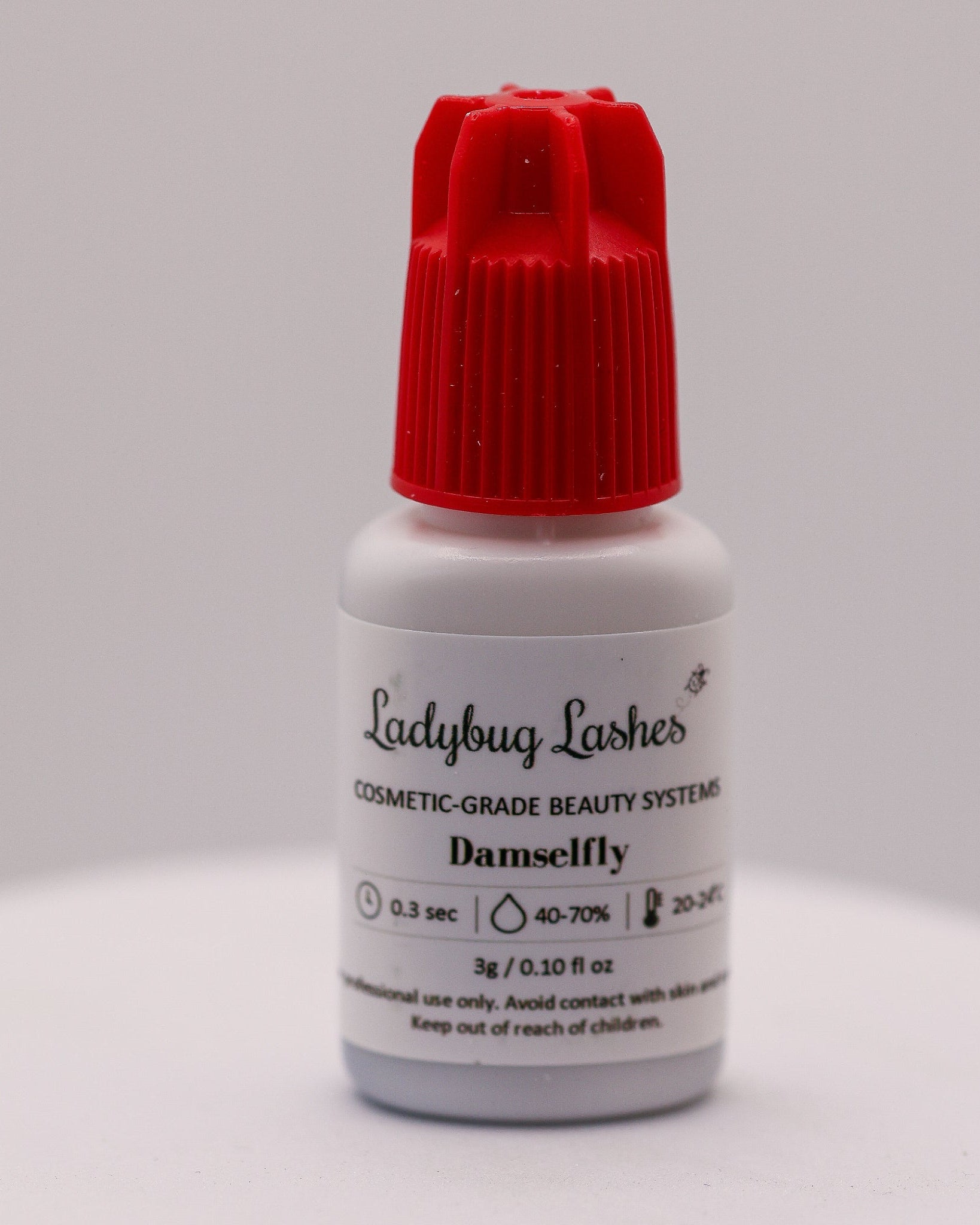
At Ladybug Lashes, our adhesives vary in viscosity as well as curing speed, allowing artists to choose an adhesive that suits how they work.
Does Humidity Change How Much Lash Glue I Should Use?
Humidity primarily changes how quickly cyanoacrylate adhesive cures.
In higher humidity, adhesive generally cures faster.
In lower humidity, it generally cures more slowly.
Rather than dramatically changing the amount of adhesive you're applying to compensate for your room, first look at whether your adhesive speed is appropriate for your environment and application speed.
If you're experiencing pop-offs, sliding or stickies, don't automatically assume the answer is simply more or less glue.
Look at what the adhesive is actually doing.
Does the Size of My Glue Dot Matter?
Yes - but glue dot size and the amount of adhesive you apply to the client aren't the same thing.
A larger glue dot doesn't mean you're automatically putting more adhesive onto each extension.
The dot is your working supply of adhesive.
How much you actually pick up depends on your dipping technique.
With Ladybug Lashes cosmetic-grade adhesives, you also don't need to automatically replace a perfectly usable glue dot every 15 or 20 minutes.
Depending on the adhesive and your room conditions, a dot can sometimes remain workable for 45 minutes to an hour.
If it's still behaving normally, keep using it.
Watch your glue, not your timer.
Can Too Much Lash Glue Cause Stickies?
It can contribute.
Excess adhesive can spread beyond the intended attachment area and increase the chance of neighbouring natural lashes becoming attached.
But adhesive amount isn't the only cause of stickies.
Adhesive curing too slowly can also mean lashes remain tacky for longer, giving neighbouring lashes more opportunity to stick together.
So if you're suddenly experiencing more stickies, look at both:
How much adhesive you're using
and
How quickly your adhesive is curing.
Can Too Little Lash Glue Cause Poor Retention?
Yes.
Retention requires a secure bond between the natural lash and extension.
If you've used too little adhesive to create sufficient attachment, the extension may detach prematurely.
But don't immediately start using huge amounts of glue if you're experiencing retention problems.
Poor retention can also be caused by preparation, attachment, adhesive speed, temperature, humidity and other factors.
Adhesive amount is one part of the system.
Should I Use More Glue With a Faster Lash Adhesive?
Not as a general rule.
If an adhesive is curing too quickly for your application speed, simply adding more adhesive isn't the best solution.
The better question is:
Is this adhesive actually the right speed for me?
A slightly slower adhesive that gives you enough time to create proper attachment may produce much better results than a very fast adhesive you're constantly fighting.
How Do I Know I've Picked Up the Right Amount of Lash Glue?
Rather than looking for one exact measurement, look at your application.
You want:
Enough adhesive to create good contact
A clean attachment
No large visible blobs
No excessive spreading onto neighbouring lashes
No repeated pop-offs caused by insufficient attachment
And remember that the right amount and dipping depth will vary depending on the lash style you're applying.
The goal is controlled pickup, not simply “more” or “less”.
Final Thoughts
There isn't one exact amount of adhesive or one dipping depth that's right for every lash extension.
A Flat Classic, Clover lash, Promade fan and handmade volume fan all have different bases and may require different adhesive pickup.
Too much can create bulky, messy attachments and contribute to stickies.
Too little can leave you without enough adhesive to create a secure bond.
And if your extensions are popping off or sliding during application, don't assume adhesive amount is automatically the problem.
Look at your lash type, adhesive speed, environment, preparation and attachment too.
The aim is simple:
Use the right amount of adhesive for the lash you're working with and create a clean, secure bond.