
For years, one of the most common pieces of lash lift aftercare has been:
“Don’t get your lashes wet.”
And somewhere along the way, that advice has turned into a much bigger misconception - that water can somehow undo a lash lift.
But can it?
A correctly processed and neutralised lash lift is not simply reversed by water.
In fact, at Ladybug Lashes, we recommend a lash bath as part of the professional lash lift treatment after Step 2 or after tinting.
So why do we cleanse the lashes during the treatment, but then tell clients to take care around water afterwards?
It makes much more sense once you understand what is actually happening to the lash.
What Actually Happens During a Lash Lift?
A lash lift isn't created by simply styling the lashes into a curled position.
It is a chemical process that changes the structure of the hair.
During Step 1, the reducing solution disrupts some of the disulfide bonds within the keratin of the lash. This allows the lash to become more flexible so it can be reshaped around the chosen shield.
Step 2 is the fixing or neutralising stage.
This oxidising stage allows those bonds to reform while the lashes are held in their new position, helping to set the shape created during the treatment.
That is why lash lifts last for weeks rather than disappearing the first time your client washes her face.
Water does not simply break those newly reformed disulfide bonds and return the lashes to their original position.
So the idea that one splash of water will “ruin” a correctly performed lash lift doesn't accurately describe the chemistry behind the treatment.
So Why Do We Tell Clients Not to Get Their Lash Lift Wet?
This is where two completely different things have become confused.
Professional cleansing during the treatment is not the same as a client going home and immediately washing, rubbing, steaming or repeatedly disturbing freshly treated lashes.
At the end of a lash lift, we apply Step 3.
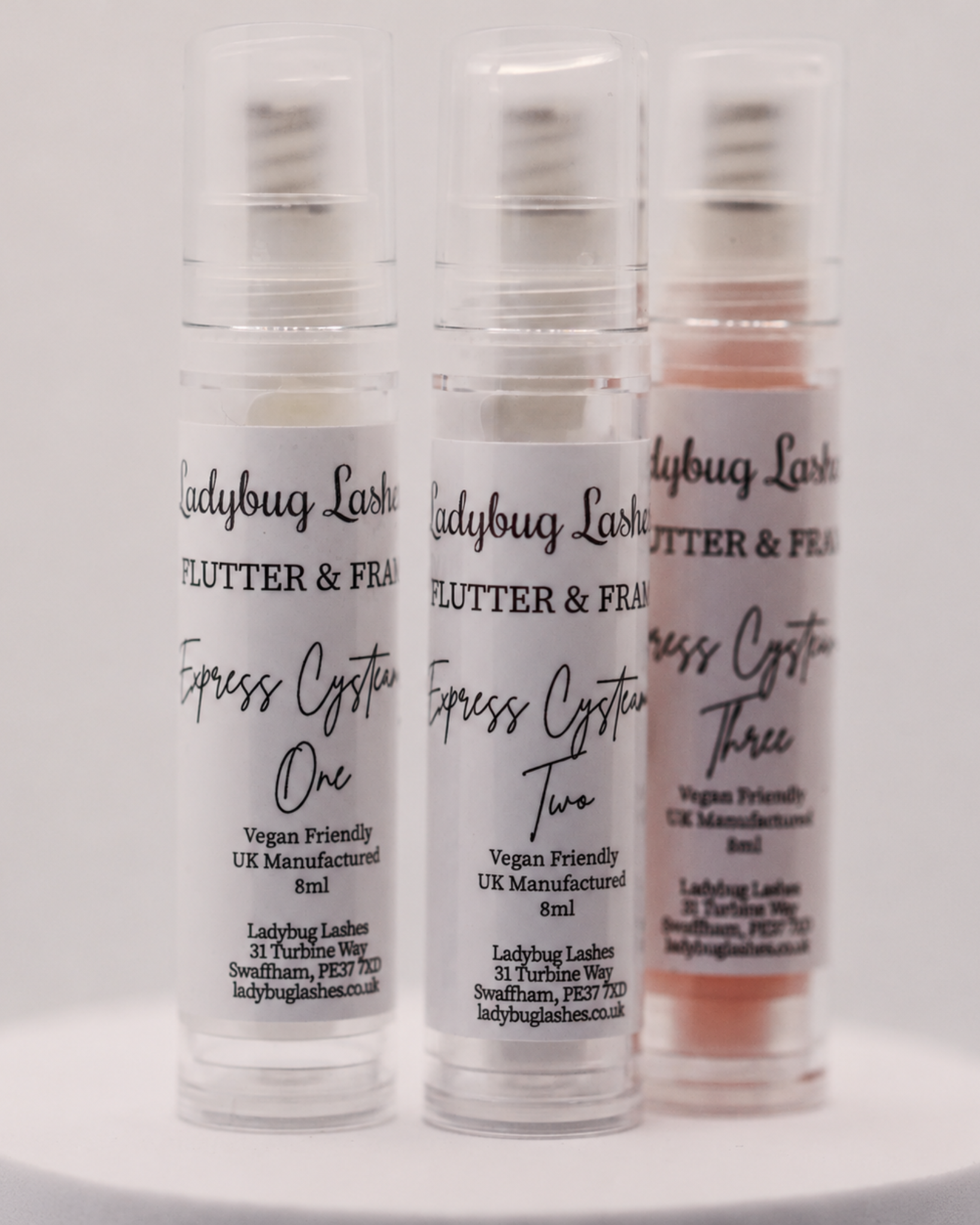
Step 3 is there to condition and support lashes that have just been through a chemical treatment.
Depending on the system you're using, it may contain conditioning, moisturising or replenishing ingredients designed to remain on the lashes for a period after the appointment.
When we tell clients to avoid washing their lashes immediately after their treatment, we aren't saying:
“Water will break your lash lift.”
We want to give that finishing treatment the opportunity to remain on the lashes and do the job it was designed to do.
We also recommend taking care around excessive steam, heat and unnecessary rubbing following the treatment.
That is very different from being afraid to professionally cleanse the lashes before Step 3 has even been applied.
Why We Recommend a Lash Bath After Step 2
Timing your processing lotions correctly is important.
But removing them correctly is just as important.
When the processing time for Step 2 has finished, that product has finished the job you intended it to do.
It needs to be thoroughly removed according to the instructions for the system you're using.
Leaving processing product behind means leaving the lashes in unnecessary contact with an active chemical product beyond the intended treatment stage.
That can contribute to overprocessing, dryness, stiffness or an overly processed result.
This is one of the reasons we love a proper lash bath.
Rather than being scared of water, think about what you are actually trying to achieve:
the chemical stage has finished, so we want the lashes clean.
We don't want remnants of Step 2, tint, adhesive or other treatment residue unnecessarily remaining on the lashes or around the eye area.
What If You're Tinting the Lashes?
There isn't necessarily one rigid sequence that every lash artist has to use.
If you aren't tinting, you may choose to thoroughly remove Step 2 and then go straight into your lash bath.
If you are tinting, you may remove Step 2, carry out your tint and then lash bath afterwards.
Some artists prefer to cleanse after Step 2 and cleanse again after tint.
And do you know what?
That's okay.
Your treatment routine needs to work for you, your timing and the professional system you're using.
The important part is understanding why you're doing it.
Step 2 should be properly removed when its processing time is complete.
Tint should be properly removed when its processing time is complete.
And before you move on to your finishing treatment, the lashes should be free from product that no longer needs to be there.
Always follow the manufacturer's instructions for the particular lash lift and tint systems you are using.
Shampoo, Rinse, Dry - Then Look at Your Lift
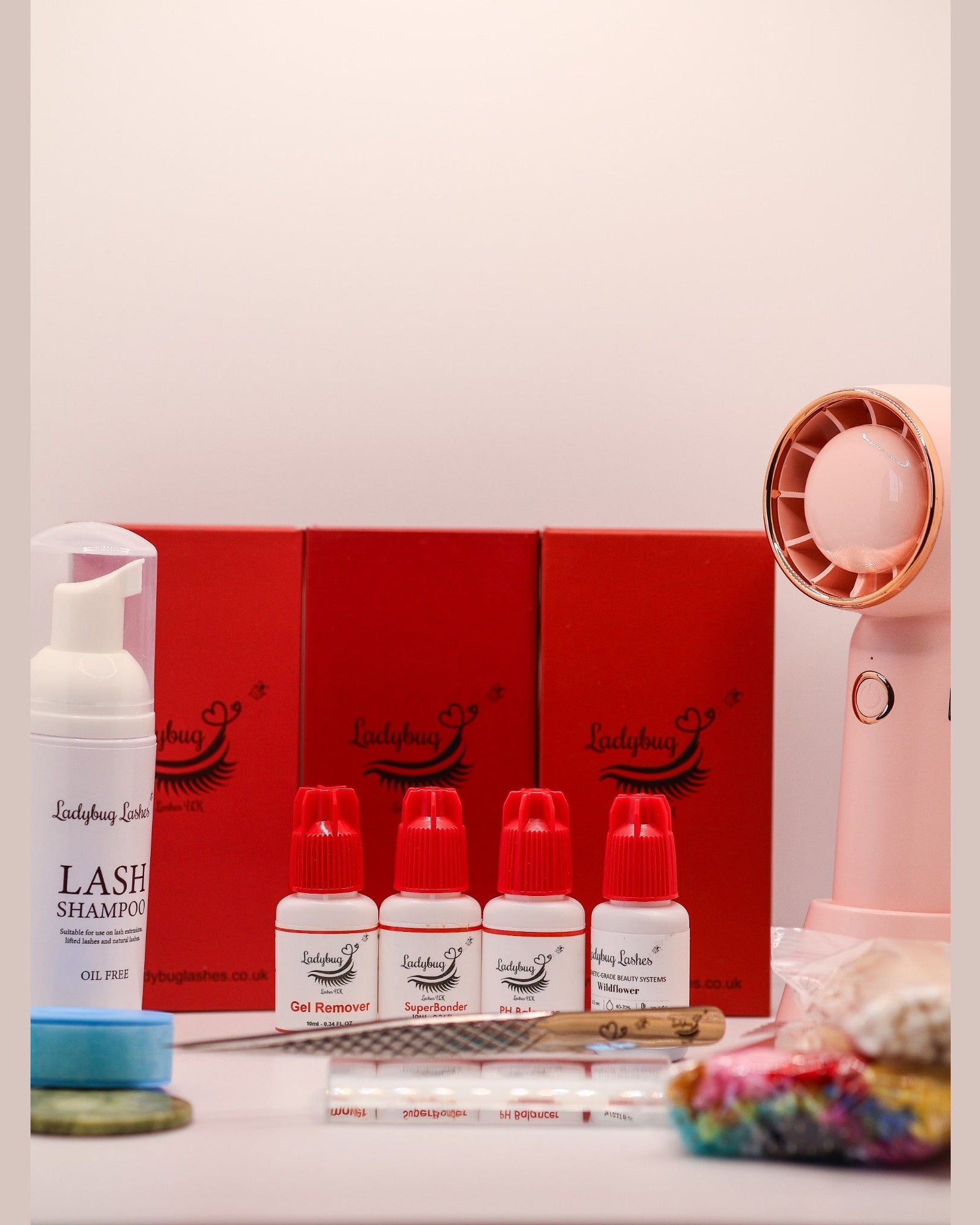
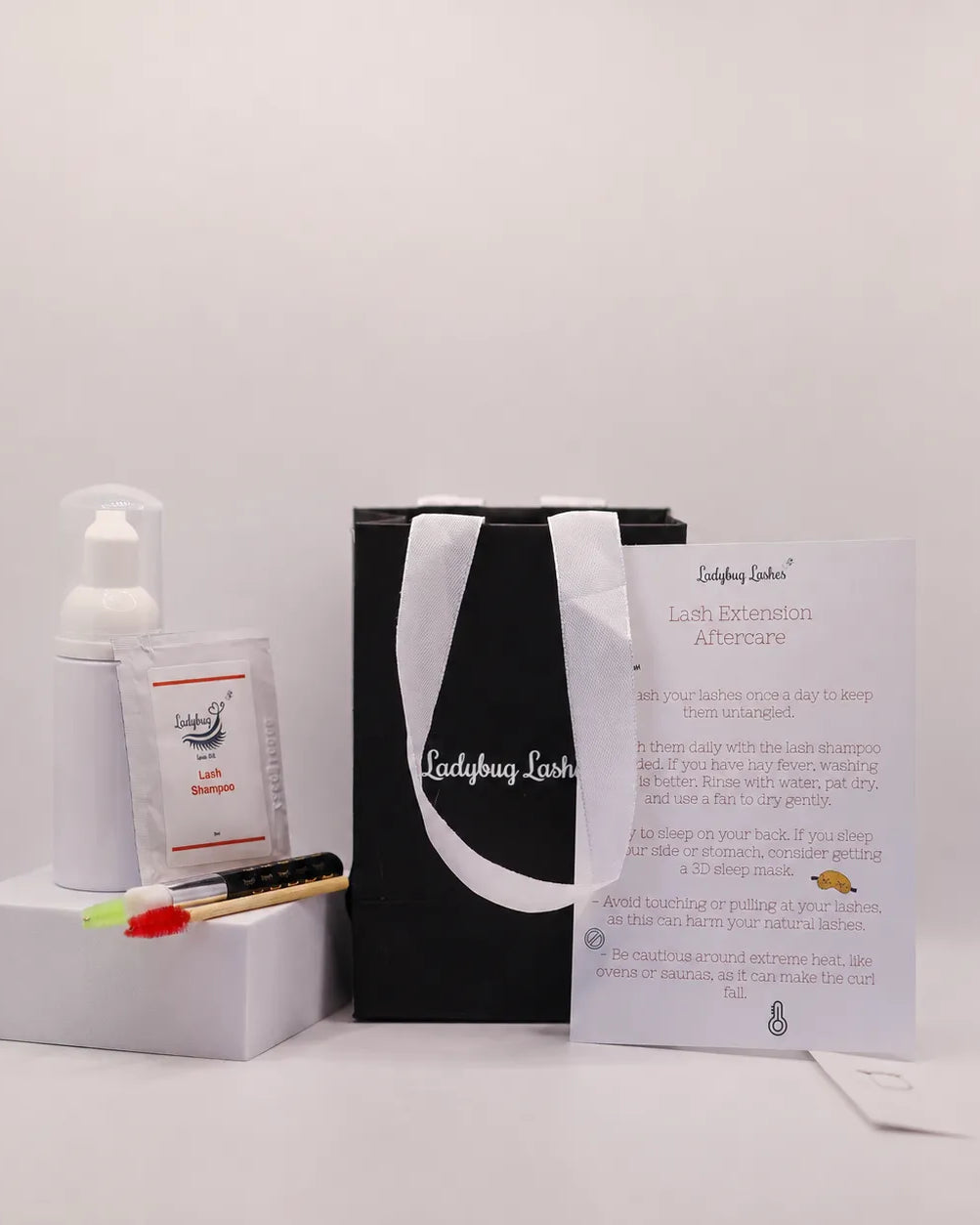
At Ladybug Lashes, we recommend cleansing with lash shampoo, rinsing thoroughly and then fan drying the lashes.
Once they're completely dry, brush them gently upwards into position.
And now look at them.
This is your true finished lift.
When lashes are still wet, stuck together or coated in treatment residue, it can be difficult to accurately assess the result you've created.
Drying and separating them allows you to see the direction, separation and curl properly before your client leaves.
Have you achieved the result you intended?
Are the lashes sitting beautifully?
Is the curl stronger than expected?
Do they need gently repositioning?
This is the point at which you can actually see your work clearly.
And Now Take Your Photograph
There's another benefit.
Clean, dry and beautifully separated lashes photograph better.
Once you've lash bathed, fan dried and brushed them into position, take your finished photographs.
You're photographing the actual lift rather than lashes covered in tint residue, adhesive or finishing product.
Once you're happy with the result and you've taken your photographs, you can apply Step 3 as the final treatment and leave it on the lashes for the recommended period.
For us, that sequence makes complete sense:
Finish the chemical process → remove the product completely → tint if required → cleanse → rinse → dry → brush → assess → photograph → apply Step 3.
A Lash Bath Isn't Going to Wash Your Lash Lift Away
This is the misconception we really want lash artists to understand.
We have become so accustomed to hearing “don't get lash lifts wet” that water itself has somehow become the thing we're frightened of.
But a lash lift isn't held together by keeping it dry.
The treatment works because we have chemically reshaped the lash and reformed bonds within its structure.
A professional lash bath after the appropriate treatment stage isn't undoing that work.
Instead, it can help you thoroughly remove treatment and tint residue, reduce unnecessary exposure to products that have finished processing, properly assess your finished result and leave the lashes clean before applying your final conditioning step.
Understand the Science, Not Just the Rule
There are plenty of rules within the beauty industry that get repeated from one artist to another.
But understanding why we do something is far more valuable than simply memorising a rule.
“Don't get your lashes wet” doesn't tell the whole story.
It doesn't explain the difference between professionally cleansing lashes during a treatment and washing off a leave-on conditioning treatment afterwards.
And it certainly doesn't mean that plain water can simply reverse the chemical process of a correctly performed lash lift.
At Ladybug Lashes, we're big believers in understanding the treatment you're carrying out.
Follow the instructions for the professional system you're using. Respect your processing times. Remove your products thoroughly. Condition those lashes afterwards.
And don't be frightened of a good lash bath.
'%3e%3cg id='Final-Copy-2_2_' transform='translate(1275.000000, 200.000000)'%3e%3cpath class='st0' d='M7.4,12.8h6.8l3.1-11.6H7.4C4.2,1.2,1.6,3.8,1.6,7S4.2,12.8,7.4,12.8z'/%3e%3c/g%3e%3c/g%3e%3c/g%3e%3cg id='final---dec.11-2020'%3e%3cg id='_x30_208-our-toggle' transform='translate(-1275.000000, -200.000000)'%3e%3cg id='Final-Copy-2' transform='translate(1275.000000, 200.000000)'%3e%3cpath class='st1' d='M22.6,0H7.4c-3.9,0-7,3.1-7,7s3.1,7,7,7h15.2c3.9,0,7-3.1,7-7S26.4,0,22.6,0z M1.6,7c0-3.2,2.6-5.8,5.8-5.8 h9.9l-3.1,11.6H7.4C4.2,12.8,1.6,10.2,1.6,7z'/%3e%3cpath id='x' class='st2' d='M24.6,4c0.2,0.2,0.2,0.6,0,0.8l0,0L22.5,7l2.2,2.2c0.2,0.2,0.2,0.6,0,0.8c-0.2,0.2-0.6,0.2-0.8,0 l0,0l-2.2-2.2L19.5,10c-0.2,0.2-0.6,0.2-0.8,0c-0.2-0.2-0.2-0.6,0-0.8l0,0L20.8,7l-2.2-2.2c-0.2-0.2-0.2-0.6,0-0.8 c0.2-0.2,0.6-0.2,0.8,0l0,0l2.2,2.2L23.8,4C24,3.8,24.4,3.8,24.6,4z'/%3e%3cpath id='y' class='st3' d='M12.7,4.1c0.2,0.2,0.3,0.6,0.1,0.8l0,0L8.6,9.8C8.5,9.9,8.4,10,8.3,10c-0.2,0.1-0.5,0.1-0.7-0.1l0,0 L5.4,7.7c-0.2-0.2-0.2-0.6,0-0.8c0.2-0.2,0.6-0.2,0.8,0l0,0L8,8.6l3.8-4.5C12,3.9,12.4,3.9,12.7,4.1z'/%3e%3c/g%3e%3c/g%3e%3c/g%3e%3c/g%3e%3c/svg%3e) Your Privacy Choices
Your Privacy Choices